
Great Responsibility Creates Great Power: Why Transformation Ownership Unlocks Strategic Advantage
The strategic advantage that can't be delegated.

Everyone tells you to know your customer. So you schedule the customer interviews. You ask the right questions - not leading ones, open-ended ones. You listen for the pain beneath the feature requests. You map the journey. You build what they asked for.
And then you watch them not use it.
So you go back. More interviews. What did we miss? Customers tell you the feature is good, useful even. They just... haven’t gotten around to it.
Or they’re waiting for the right moment. Or they need one more thing before it clicks.
Then you rebuild. And you build it right. The thing matches what they described. Engineering delivered. Design nailed the experience. Launch day arrives.
And nothing happens again.
After enough cycles of this, something shifts. You stop trusting customer insight as a foundation for big bets.
Your roadmap shifts from “where could we take customers?” to “what are customers already doing that we can optimize?”
It feels like wisdom. It feels like learning from experience. It feels like the mature response to an unpredictable market.
But you still have quarterly goals. And the demand for conviction is ever increasing.
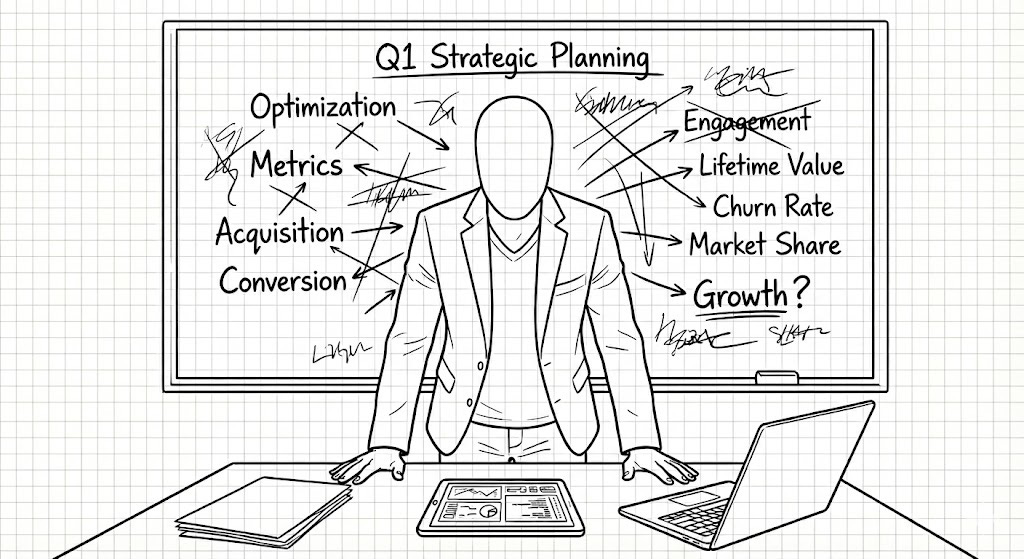
So you look for someone else to carry it. And there's no shortage of people willing to take it off your hands.
The relief comes in familiar forms.
The first: hand it to the specialists.
Marketing owns customer understanding. User research owns the insights. Product builds what’s clear and validated. The separation feels clean - everyone stays in their lane, accountability is distributed, and no single leader carries the prediction burden alone.
The pitch meetings change. “Research says customers want X” becomes the opening line. If users don’t adopt, it’s a research problem, not a product problem. Not a leadership problem.
The second: let the data decide.
Install the analytics. Instrument the flows. Track every click, every drop-off, every conversion. Build dashboards that show what’s working and what isn’t. Remove human judgment from the equation entirely.
“The data tells us” replaces “we believe.”
A/B test everything. Follow the numbers. If customers engage with something, build more of it. If they don’t, kill it. The system optimizes itself.
This feels rigorous. Scientific, even. No more gut calls that miss. No more conviction that proves wrong. Just signal.
The third: let the machines figure it out.
AI can process patterns at scale humans can’t match. Feed it the customer data - all of it. Let it find the correlations you’re missing. Pattern recognition beyond human cognitive limits.
The promise is compelling: technology solves the limitation that made you retreat in the first place. You couldn’t predict customer futures, but maybe the algorithm can.
Each option feels rational. Each removes you from the prediction seat. Each has a clean logic that’s hard to argue with.
But notice what they all have in common.
The specialists, the dashboards, the algorithms - they get paid to bring you insight. And they deliver. About what customers said, what they clicked, what patterns their history reveals.
All past tense.
Your strategy is about the future. What customers will do when transformation is required.
That gap is where your edge lives. And that responsibility cannot be delegated.
Here’s the inversion most leaders miss.
They experience responsibility as weight. Something to distribute, delegate, share. The prediction burden feels heavy precisely because it carries consequence. Getting it wrong costs quarters, careers, companies.
But that weight is also the source of leverage no one else can access.
When you accept responsibility for your customer’s transformation - not just their satisfaction - you develop conviction that backward-looking systems cannot generate. You see where they’re headed before they can. You build for the person they’re becoming, not just the person they are.
The specialists can inform this. The data can validate it. The AI can accelerate it. But none of them can originate it.
Conviction about customer futures comes from one place: the leader who takes responsibility for those futures.
And that great responsibility creates great power.
Let me show you what I mean.
Consider what the data said about canned water in 2019.
The market was mature. Dominated by established players. Customer research would have told you hydration was a commodity - people bought whatever was convenient and cheap. No one was asking for skull-branded tallboys that looked like beer cans.
Liquid Death didn’t ask customers what they wanted. They had conviction about who customers could become.

They saw people who wanted to make healthy choices but hated the virtue-signaling that came with wellness culture. People who wanted hydration without the yoga-mom aesthetic. The transformation they designed for - rebellious person who makes healthy choices - didn’t exist in any customer interview. It couldn’t. Customers couldn’t explain an identity they hadn’t lived yet.
Five years later: $333 million in revenue. $1.4 billion valuation. Customers call themselves “cult members” and “murderers of thirst.”
The analysts watching backward would have said don’t. The leader with conviction about the transformation said go.
Now consider what the data said about foam clogs in 2010.
TIME Magazine named Crocs one of the worst inventions ever made. The fashion industry mocked them. Customer research would have told you people wanted shoes that looked good - or at least didn’t look aggressively ugly.
Crocs didn’t change the design. They had conviction about who customers could become.

They saw people exhausted by fashion judgment - people who wanted comfort without apology, who would trade “looking good” for “feeling authentic.” The transformation they designed for - confident person who doesn’t need fashion approval - required customers to become someone they weren’t yet. Someone who could wear “ugly” shoes and feel more confident, not less.
Crocs’s CMO said it directly: “We’ve been ugly since 2002 and have no intent to change that silhouette.”
A decade after TIME called them the worst invention, TIME named them one of the most influential companies. $4.1 billion in revenue. Balenciaga collaborations at $850 a pair. Healthcare workers, celebrities, and Gen Z all wearing the same “ugly” shoe - because Crocs owned the transformation, not the aesthetic.
Both companies show something that specialists, analytics, and AI couldn’t generate: conviction about a customer future that didn’t exist yet.
The historical data said no. The transformation said yes.
The lagging indicators eventually confirmed what they already knew:
Revenue doesn’t create transformation. Transformation creates revenue.
Most leaders watch conversion funnels. They track acquisition costs, activation rates, retention curves. All useful. All downstream of the question that matters.
Transformation ownership lets you see upstream - before the metrics confirm what’s already happening.
Liquid Death saw it in social engagement before revenue confirmed it. People weren’t just buying water - they were posting cans at parties, wearing merch, calling themselves cult members. The identity shift was visible in behavior that didn’t touch the purchase funnel.
Crocs saw it in healthcare workers during the pandemic. Nurses weren’t buying shoes - they were making a statement about comfort mattering more than appearance. The transformation was visible before the 430% sales increase showed up in quarterly reports.
When you know what transformation you own, you know what signals to watch. Not clicks and impressions - identity change. Not engagement metrics - behavior change.
The people mobilizing around your transformation are showing you where revenue will come from quarters before it arrives.
That's what becomes visible when you own the transformation.
Whether you claim it is a different question.
You have two paths from here:
The first is familiar. Let the specialists own customer understanding. Let the data tell you what’s working. Let the AI find patterns in historical behavior. Hedge your bets. Optimize what’s already moving. Wait for the quarterly signals to confirm what’s safe.
This path feels rational. It protects you from the prediction failures that burned you before. It distributes the burden. It lets you point to the research, the analytics, the algorithms when user adoption crawls.
The second path is harder. Take responsibility for where your customers are headed. Develop conviction about who they’re becoming - not just who they are. Build for the transformation they can’t yet explain. Watch for identity signals instead of transaction signals. Measure transformation completion instead of feature adoption.
This path requires something the other doesn’t: courage.
Courage to have conviction when the historical data says no. Courage to build for a customer future that doesn’t exist yet. Courage to own the outcome when you could have delegated it.
Here’s your next step:
Name the transformation you’re responsible for. Not the product you sell. Not the features you’re building. The becoming - who your customers are when they’ve completed the journey you’re designing.
Write it down. One sentence. The identity shift you own.
If you can’t write it, you don’t own it yet. And if you don’t own it, you’re renting strategy from someone who does.
If you can write it - if you can name the transformation with clarity and conviction - you have something the familiar path can never provide.
You have a foundation to build on.
And that great responsibility creates great power.
PS: What resonated most from this analysis? Reply with one insight.