
Crossing The Change Chasm: Strategy Scales When Context Is Owned
Prime Positioning - Episode 9: Your best strategy is the one you give away

Prime Positioning - Episode 9: Your best strategy is the one you give away
Kedaris is mid-transformation, but Ramorian is silent, and the board meeting is weeks away. James tests if what worked with his team transfers externally, and discovers that giving away your best work is how you prove you own it.
Context Owned Eliminates the Coordination Tax
Day 16.
“Already handled.”
James stopped mid-stride. The Product VP didn’t look up from his laptop. “Authentication architecture. Saw your Friday context, talked to Engineering Saturday morning, made the call. We’re moving forward with the streamlined approach.”
Three weeks ago, that decision required three meetings and a slide deck. Now it happened in a weekend thread.
The Engineering Director was already on to the next thing. “If we’re clear on authentication, I need a prioritization call on the API integration. Two options, different tradeoffs. Can decide it now if you’ve got three minutes.”
“Go.”
“Option A gives us flexibility but adds a sprint. Option B ships faster but locks us into the current architecture.” He pulled up two diagrams. “Given Friday's positioning talk—Strategic Decision Architecture as our territory—Option B reinforces the demo. We practice what we sell.”
“Option B,” the Marketing VP said before James could respond. “And that’s not just my opinion. That’s what Kedaris will want to see.”

The Engineering Director nodded. Closed the diagrams. Done.
James looked around the conference room. No one had scheduled this meeting. No agenda existed. People had just shown up because context was already present and decisions needed making.
Two decisions in four minutes. The Marketing VP was already back on her laptop. No one asked to schedule follow-up. They just moved.
“Lisa wants to move up their check-in. Says they have early results to share.”
“How early?”
“One week in. She sounded... surprised.”
James felt it then—the shift he’d sensed building but couldn’t name until now. His team wasn’t waiting for direction. They weren’t asking permission. They were moving, and the flywheel was moving with them.
“When?”
“Two o’clock. I told her we’d confirm this morning.”
“Confirmed.”
The Marketing VP was already typing.
The Product VP looked up from his laptop. “If Kedaris’s pattern matches ours, we’re not looking at an anomaly. We’re looking at something transferable.”
He didn’t finish the thought. Didn’t need to. Everyone understood what that meant.
Thirty-five days until the board meeting. And for the first time, James wasn’t counting them with dread.
What Customers Repeat Reveals What You Own
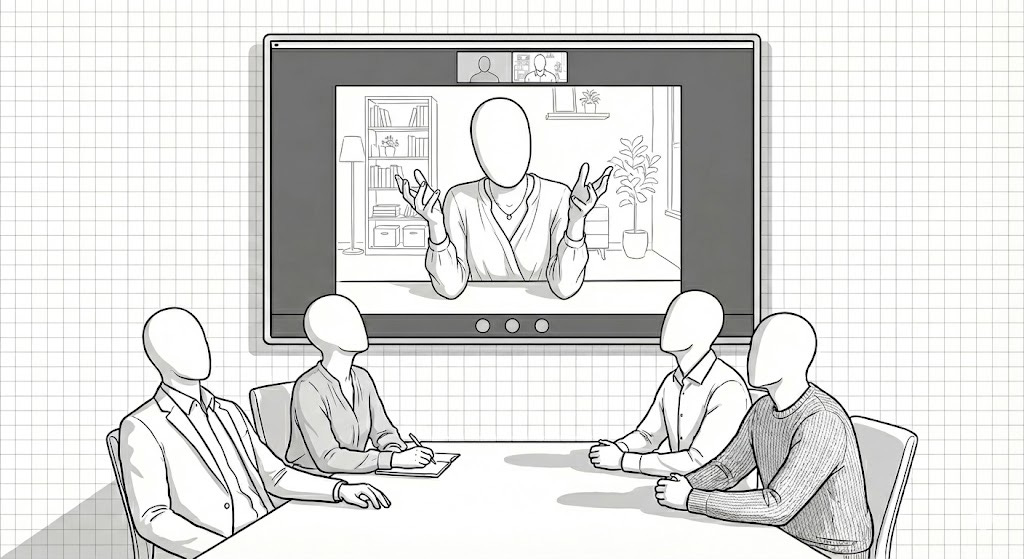
Kedaris Check-In. Two o’clock. Lisa’s face filled the screen.
Something was different. James noticed it before she said a word. The tension that had marked their baseline call—arms crossed, skepticism visible—was gone. In its place, something he recognized. The look of someone who’d seen something work and was still processing what it meant.
“I need to tell you what happened this morning,” Lisa said.
No preamble. No small talk. James leaned forward.
“Our Monday leadership sync. The one that usually runs ninety minutes." She paused, almost laughed. "Twenty-two minutes. Three decisions. Our meeting-to-decision ratio just flipped.”
The Marketing VP glanced at James. He kept his focus on Lisa.
“What shifted?”
“People came prepared. They already knew the context. The team didn't have to rebuild everything from scratch." Lisa leaned forward. "Not the choice itself—the runway to the choice.”
“Context traveled,” James said.
“That’s what my VP of Engineering called it.” Lisa leaned back. “Friday afternoon, we did the flywheel check-in you taught us. Fifteen minutes. Felt almost too short. But then this morning, people were referencing things from that conversation like they’d internalized them. Not repeating what was said—building on it.”
The Product VP was taking notes. James could see him connecting patterns.
“Lisa, can I ask you something?”
“Go ahead.”
“Before this week—what did you think the problem was?”
Lisa considered the question. “Slow decisions. We’d diagnose an opportunity, debate the approach, schedule alignment meetings, loop in stakeholders, circle back with analysis... and by the time we committed, the window had moved.” She stopped. “That’s what I would have said a week ago.”
“And now?”
“Now I think we were never slow at deciding. The deciding part took five minutes once we got there.” She leaned forward, pointing at the camera like James needed to understand this specifically. “We were slow at arriving. At getting everyone to the point where a decision could happen. That’s where the weeks went. Not the choice itself—the runway to the choice.”
There it was. The same recognition James’s team had discovered. Not a new framework—a revealed reality. The gap was never decision quality.
“You weren’t slow,” James said. “You were rebuilding context every time.”
“Every single meeting. Starting from scratch. Explaining what we already knew to people who should have already known it.” Lisa exhaled. “One week. That’s all it took. Now we own it. The context lives in the system, not just in our heads.”
The Marketing VP unmuted. “Lisa, what’s your team saying?”
“They’re confused.” Lisa smiled. “The good kind of confused. They keep asking why it feels different. I told them we’d figure out the language later. Right now, we’re just going to keep practicing.”
James nodded. “Right.”
“There’s one more thing.” Lisa straightened. “I want to expand this to our product team. They’re the ones most affected by our slow coordination. If this works for them like it worked for us...”
She didn’t finish. Didn’t need to.
“Let’s design that together,” James said. “Same baseline process. Measure before and after.”
“Already started the calendar invites.”
The call ended five minutes later. The team sat in silence for a moment.
The Product VP spoke first. “Their pattern matches ours. Week one, same acceleration. Same confusion about why it feels different.”
“Exactly,” James said.
“Which means this isn’t about us,” The Product VP closed his laptop slowly. “It’s about the transformation itself. It transfers.”
Observe Your Pattern, Then Name It
The Product VP stood at the whiteboard. The rest of the team watched him think.
“Something’s bothering me,” he said. “In a good way.”
James waited. He’d learned over the past two weeks that the Product VP processed out loud, and interrupting the process usually cost more time than patience saved.
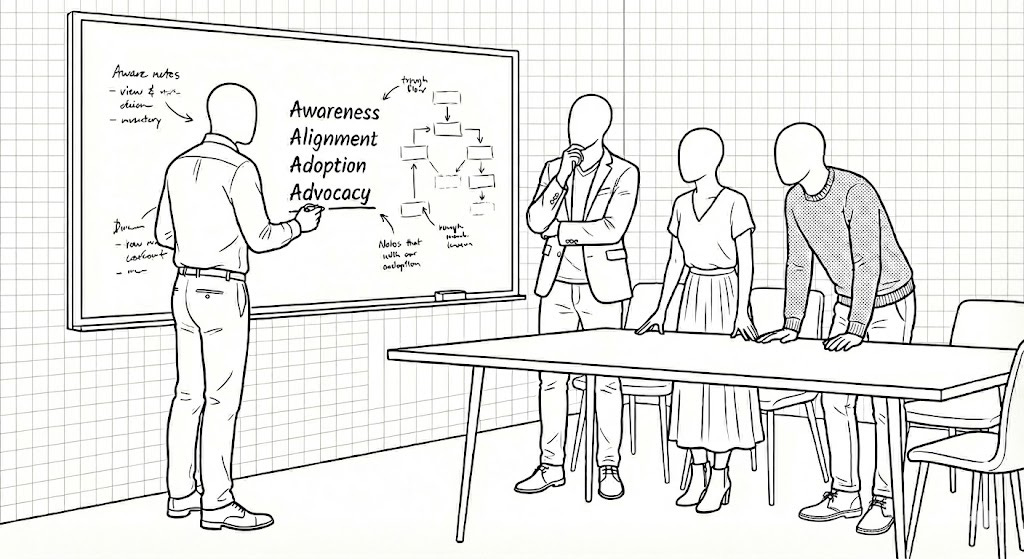
“Kedaris went through something specific. Not just ‘faster decisions.’ A sequence.” He started drawing. “First, they became aware. Remember her baseline call? Lisa knew something was wrong—decisions taking too long, opportunities closing—but couldn’t name it precisely.”
The Marketing VP nodded. “She called it ‘slow decisions.’ Classic symptom, not cause.”
“Right. Awareness. Then came alignment. She agreed to try the flywheel approach. Not because she believed it would work—because the diagnosis resonated enough to test.” He wrote the second word. “Still skeptical. But aligned enough to act.”
“That’s where most change efforts die,” the Engineering Director said. “People agree in the room, then nothing happens.”
“True. But Kedaris moved to the third stage. Adoption. The team did the Friday check-in. Then Monday morning happened differently. They're not trying it anymore—they're doing it.”
He wrote the third word, then paused.
“And now she wants to expand. Not because we’re pushing—because their pulling. Lisa went from skeptic to sponsor in one week.” He added the fourth word. “Advocacy.”
James saw the pattern. “You’re describing what happened to us.”
“Exactly.” The Product VP turned to face the room. “Marketing, three weeks ago you were aware something was broken but skeptical about another framework. Then you aligned enough to try it with your team. Then you experienced it working—that positioning decision done in twelve minutes. Now you’re the one telling Lisa this changes everything.”
The Marketing VP didn’t argue. “All four stages. In order.”
“So did Engineering. So did I.” The Product VP capped his marker. “Awareness. Alignment. Adoption. Advocacy. Same sequence. Every time.”
The room was quiet.
“Here’s what’s bothering me,” he continued. “We’ve been thinking about this as a product. Something we deliver. Features, implementation, ongoing support. But that’s not what Lisa bought.”
“She’s experiencing transformation,” James said.
“She’s experiencing transformation stages. And they’re predictable.” The Product VP studied his four words. “If we know the stages, we can design for them. Diagnose where someone is. Prescribe what moves them forward.”
He paused, then looked at James.
“We don’t sell outcomes. We architect journeys.”
The Engineering Director leaned forward. “You’re talking about organizing our entire approach around this.”
“I’m talking about recognizing what’s already true.” The Product VP sat down, energy shifting from discovery to clarity. “We’re not guiding their transformation. We’re helping them own it. Different architecture entirely.”
James let the insight settle.
The Product VP was right. Kedaris didn't transform because she understood the flywheel. They transformed because she moved through stages.
Awareness. Alignment. Adoption. Advocacy.
The same stages his team had moved through. The same stages Ramorian never completed. They’d stalled somewhere between alignment and adoption—agreed to try, but exited before the transformation could take hold.
“If we’d understood this six months ago,” the Marketing VP said quietly, “we might not have lost Ramorian.”
“Maybe.” James stood. “But we understand it now.”
He walked to the whiteboard, studied the four words.
“Let’s pilot it. Cross-functional group. This week.” He looked at the Product VP.
“Design the approach. Map our offerings to these stages. Show me what changes if we organize around the transformation instead of the product.”
The Product VP was already reaching for his laptop. “I’ll have something by Wednesday.”
“Make it Tuesday.”
“Tuesday.”
The room broke into focused motion. The Engineering Director had questions about implementation. The Marketing VP was already thinking about how this would change the Kedaris expansion conversation.
James watched them work. Something had shifted. They weren’t just executing a methodology now. They were extending it. Creating from what they’d learned rather than following what they’d been taught.
The capability was transferring.
One Customer Is Proof, Three Is a Pattern
Thursday. End of week three.
The team sync was supposed to be thirty minutes. It ran twelve.
“Two more,” the Marketing VP said as people started to close laptops. “Two more companies from our outreach are asking for what Kedaris is experiencing.”
James paused. “Same language?”
“Different words, same pattern.” She pulled up her notes. “One’s a fintech company—VP of Product reached out after seeing Kedaris’s name on our case study draft. Said they’re ‘drowning in coordination overhead.’ The other’s a healthcare SaaS company. Their COO used the phrase ‘meetings about meetings.’”
The Engineering Director almost smiled. “That was us eight weeks ago.”
“That was everyone eight weeks ago. We just didn’t have language for it.” The Marketing VP looked at James. “They’re describing the same problem we had. The same problem Kedaris had. The same transformation they’re experiencing.”
The Product VP connected it immediately. “Where are they in the four stages?”
“Awareness. Solidly. They know something’s broken. They’re looking for alignment—a reason to believe our approach is different from the last three frameworks that didn’t stick.”
“So we start with the diagnostic. Same as Kedaris.”
“Same as us.” The Marketing VP closed her laptop. “I’m seeing a pattern I wasn’t expecting.”
“Which is?”
“The companies finding us aren't random. They're not shopping for software. They're experiencing coordination overhead killing their velocity. Starting to realize it's the architecture underneath.”
James did the math quietly. Kedaris’s contract would be about half what Ramorian was. These two companies combined, another quarter.
Not replacing Ramorian—building something different.
“What’s the timeline on these two?” he asked.
“Calls scheduled for next week. If they match Kedaris’s pattern, we could have baselines started within ten days.”
The Engineering Director leaned back. “We went from one proof point to potentially four in less than a month.”
“Three weeks,” the Product VP corrected. “We started with Lisa three weeks ago.”
Three weeks. James let that settle. Three weeks from first external proof point to repeatable pattern. Three weeks from hoping this worked to watching it transfer.
The team filed out, already planning next steps. James stayed behind, looking at the whiteboard. The four A’s were still there from Tuesday. The Strategy Flywheel still anchored the wall.
And in his drafts folder, an email to David was still waiting.
Give Away What You've Proven
Friday evening.
James sat in the conference room, laptop open. The Product VP’s framework from Tuesday was already reshaping how they talked about everything. Kedaris wasn’t a customer anymore—she was in Adoption, moving toward Advocacy. The two new inbound companies were in Awareness, ready for Alignment.
The team had spent Thursday mapping their entire approach to the four stages. Where they’d been pushing features, they now saw diagnostic opportunities. Where they’d been selling implementation, they now saw transformation architecture.
It was working. And David still didn’t know.
James looked at the email draft on his screen. He’d rewritten it a half-dozen times over the past six weeks. The early versions had been apologies. Then pitches. Then promises.

This version was different.
David,
I’m not writing to ask for another meeting or to pitch you on what’s changed. I’m writing because something has changed, and I thought you should know.
We lost Ramorian because we were selling visibility when you needed transformation. You told us that directly, and we didn’t hear it. That’s on me.
Since then, we’ve built something different. Not a better version of our old approach—a fundamentally different architecture for how organizations make decisions at velocity. We call it Strategic Decision Architecture.
I can’t tell you it would have saved the relationship. I can tell you it’s working. Our decision velocity increased 5x. More importantly, our decisions improved. We’re transforming a customer right now—Kedaris—and watching them experience the same shift we did. Other companies are finding us because they recognize the problem we’re solving.
I’m not asking you to come back. I’m telling you we’ve become something different than the company you left.
If you’re curious what that looks like, I’d be glad to show you. No pitch. Just the work.
—James
He read it once more.
Then hit send.
He closed his laptop and looked at the whiteboard—the four A’s on one side, the Strategy Flywheel on the other. Two frameworks now. Both tested. Both transferring.
The work would bring Ramorian back. He just had to keep proving it.
He turned off the lights and headed home.
Monday. Week four.
James arrived early. The cross-functional pilot was producing results faster than expected—the Product VP’s transformation stages model had given the team a shared language that accelerated everything. Awareness conversations now had a destination. Alignment meetings had a next step. Adoption wasn’t a hope; it was a measurable state.
Kedaris’s second two weeks were beginning today. The product team was using the flywheel, expanding what had started with Lisa’s leadership group. If the pattern held, Kedaris would move from Adoption to Advocacy before the month ended.
The two new companies—fintech and healthcare SaaS—had their diagnostic calls scheduled for this week. The Marketing VP was already mapping their intake process to the four A’s.
James checked his inbox. Nothing from David yet. Too early to expect a response. These things took time—especially when the last interaction had been Ramorian walking away.
The Engineering Director knocked on the doorframe. “Got a minute?”
“What’s up?”
“Something’s clicking for me about how all this connects. The flywheel, the four A’s, the way we’re architecting handoffs—systems to people, people to systems.” He paused, organizing his thoughts. “If this works for governance, it changes what we can build. I want to walk you through it later this week. Not ready yet. But I’m seeing something.”
James nodded. “Find me when you’re ready.”
The Engineering Director headed back to his desk. The Marketing VP passed him in the hallway, coffee in hand, already reviewing notes for her first call of the day.
This was the rhythm now. Not waiting for direction. Not asking for alignment. Just movement, coordinated by context that no longer needed to be rebuilt every morning.
Twenty-eight days until the board meeting.
Twenty-eight days to prove transformation travels.
PRACTICE: The Strategy Screenplay Test
Time: 2 minutes
Most leaders protect their strategy like it’s a competitive secret. Category owners give theirs away and win because of it.
Here’s the test: Think of your core strategic advantage—the thing you believe separates you from competitors.
Now ask yourself: Could I teach this completely to a customer and still win?
If no → You’re protecting information, not owning transformation. The moment you stop coordinating, the advantage disappears.
If yes → You own capability transfer. Your moat isn’t what you know—it’s that you can systematically teach it.
James discovered: Dayanos didn’t win by protecting the Strategy Flywheel. They won by proving Kedaris could own it in two weeks. The more they gave away, the more it proved only they could transfer transformation at that velocity.
AI Prompt:
Here's what I consider our core strategic advantage:

[Describe your key differentiator—methodology, process, insight, capability]

The reason I think this creates competitive advantage:
[Why this matters / what it enables]

Now help me test if this is transferable or just protective:

If I taught this completely to a customer, could they own it without me?

What would Week 1 look like?
What metric would move if they're getting it?
When would they stop asking and start creating with it?


Does teaching this make me stronger or weaker?

Would competitors copying my framework threaten me?
Or would it prove I own the transformation they can't replicate?


What am I protecting that I should systematically give away?

What creates my actual moat—the information or the transfer capability?
What would change if I made my entire methodology public?


Design my transfer test:

Who could I teach this to right now?
What would prove they own it (not just understand it)?
What would natural expansion look like (them pulling, not me pushing)?

Show me the difference between strategy I'm protecting (probably renting) and strategy I should give away (probably owning).
Next Episode: Early Wins Create Breakthrough Momentum (Now Live)
Kedaris transformation completes. The pattern proves repeatable. And James finally gets a reply from Ramorian — not the answer James expected.
Subscribe to follow the transformation journey, and share with a leader who’s ready to give their best work away.