
The On-Demand Cover Band: How AI Turns Music Listeners Into Co-Creators
The days of Napster are here again — memes first, business models next

Songs are like time machines. They carry us back to weddings, road trips, heartbreaks, first dances.
A few opening notes and you’re there again — the joy, the ache, the possibility.
But what if those songs didn’t just take you back — what if they could evolve with you?
Take Sam Cooke’s “A Change Is Gonna Come.” The original is already drenched in soul.
Yet certain covers infuse it with different layers—stretching phrases, bending notes, adding modern textures. Suddenly, the song feels alive again. The same message, but delivered in a way that resonates differently, maybe even more deeply, today.

Father and son singing the cover for A Change Is Gonna Come”
That’s the power of reinterpretation. And AI is putting it in your hands—giving you, in effect, your on-demand cover band.
When a Song Lives Again
What a cover does so well is expand the original; adding new layers without erasing what came before.
And when you listen, there’s a shift: it doesn’t just feel like listening, it feels participatory. You chose the song, you shaped its transformation, and now it carries your fingerprint.
Imagine the song from your wedding — the one you danced to with your spouse, or watched a family member tear up as it played. Years later, you hear it again. But this time, it’s reimagined in a new style. Same melody, same lyrics, but with fresh textures that fit where you are now in life.
It doesn’t replace the memory. It layers on top of it. Suddenly, the song carries both the old meaning and a new one. That’s what an on-demand cover band can do: take a moment you thought was frozen in time and let it breathe again.
Most of us will never step into a studio. But hearing—or guiding—AI reinterpretations scratches the creative itch. It’s not just consumption. It’s creation by proxy.
From Listener to Co-Creator
Every wave of music tech has reshaped how people interact with songs:
Napster let listeners become curators. You weren’t stuck with radio—you chose the order, you built the playlist.
iTunes/iPod reframed it as business model innovation: “a thousand songs in your pocket.”
Spotify scaled personalization. The algorithm became your DJ, serving up tracks that felt tailored to your mood.
AI now lets listeners become co-creators. You’re doing more just organizing songs. You’re reimagining them.
That’s why the metaphor matters. If AI is “just another tool,” it blends into the noise of apps. But if it’s “your on-demand cover band,” the outcome is obvious: this technology expands what’s possible for me.
Possibility Begets Possibility
It starts small. A familiar song with a new vibe.
But once you’ve seen one track reimagined, it’s hard not to ask: What else could I reshape?
If this ballad works as a jazz standard, what about that rock anthem as a gospel choir?
If I can recast music I know, can I also recast moods, moments, even memories?
Possibility unlocks more possibility. It’s not about gimmicks—it’s about rediscovering creativity in a life where that side of yourself may have been muted.
And this isn’t theoretical. Platforms like Udio are already in beta, positioning music not as something you listen to, but as something you make. Their homepage tagline says it directly: “Make your music. Imagine it. Create it.” With a few prompts, you can generate a song on demand — turning possibility into participation.

From Playground to Business Model Innovation
Every disruptive shift begins in the playground. Early AI songs are mostly memes: Drake singing Oasis, SpongeBob rapping Kanye. Easy to dismiss.
But memes are the signal. Udio users are generating 10 tracks per second—nearly a million songs a day. Deezer reports 20,000 AI songs uploaded daily, a 100% increase in two months. In total, over 170 million AI tracks exist already. This isn’t fringe—it’s scale.
And the friction has started. Elton John, Paul McCartney, Dua Lipa, and others are pressing governments for licensing reforms. ABBA’s Björn Ulvaeus warns AI could cut creator incomes by 24%, or €22 billion by 2028. These are the same fault lines Uber and Airbnb hit with municipalities, or Jobs hit with labels before iTunes reframed piracy into “a thousand songs in your pocket.”
For platforms, the tension is clear:
Libraries monetize access to what exists.
Playgrounds monetize participation in what could exist.
The winners will be those who fuse both.
And monetization is the hinge. Just as Spotify didn’t invent streaming but captured demand with subscriptions, AI-driven music will need its own reframing:
Access + participation pricing: paying not just to stream music, but to reshape it.
Ownership tiers: customized re-imaginations tied to personal libraries or collectible tokens.
Discovery rails: recommendation engines surfacing the best AI reinterpretations, just as Spotify surfaced indie artists who later broke mainstream.
For independent creators, the stakes are high. Spotify helped artists like Billie Eilish, Chance the Rapper, and countless others break out because it collapsed the cost of discovery. An on-demand cover band model could do the same—surfacing artists who use AI as creative accelerant, not replacement, and making them discoverable at scale.
For product leaders, the lesson is sharper: business model innovation is forged in conflict. Not in clean adoption curves, but in the negotiation between demand, culture, and regulation.
The On-Demand Cover Band Strategy Flywheel
Seen through the Strategy Flywheel lens, the trend looks less like novelty and more like inevitability. Each stage mirrors how product adoption really works:
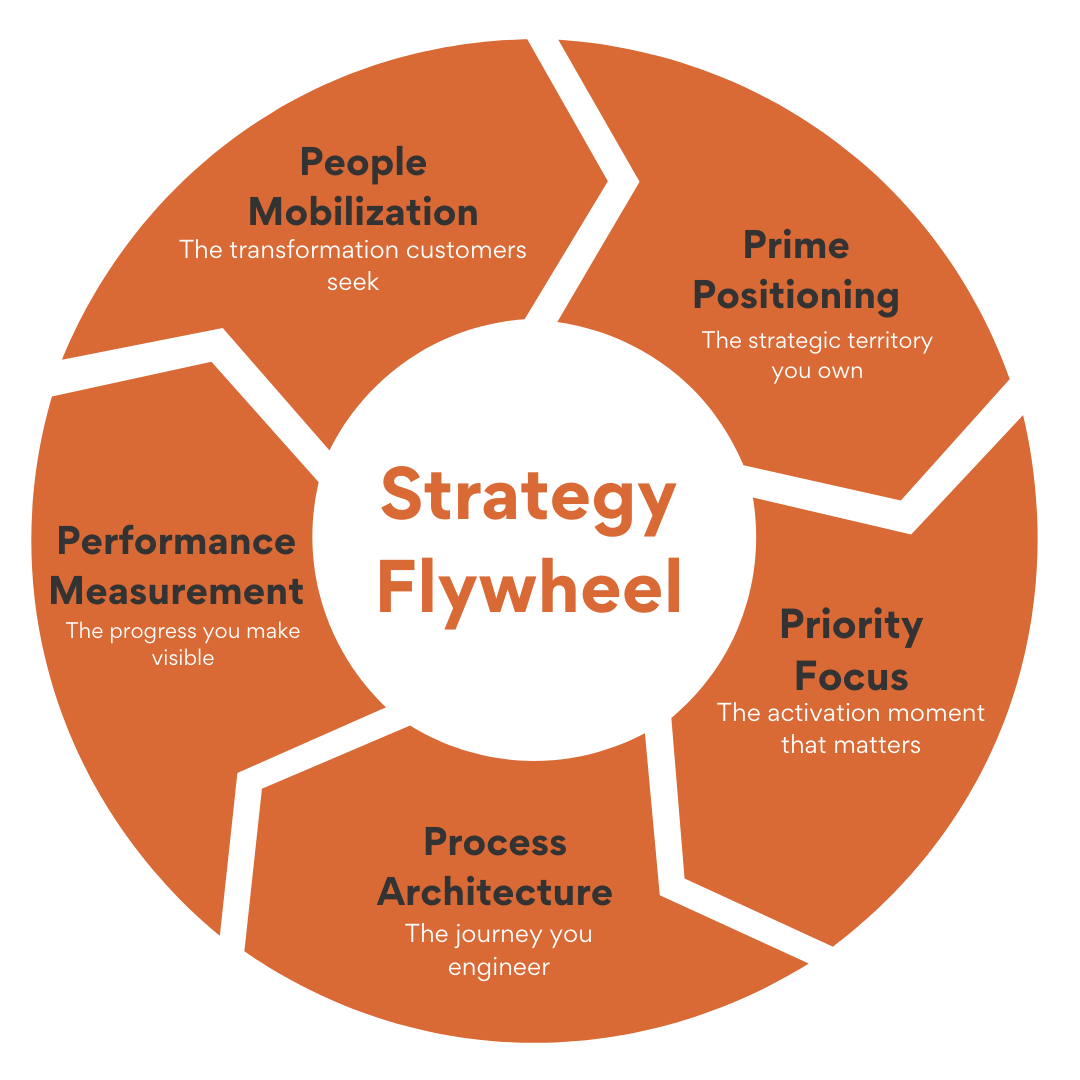
Demand Signal (Prime Positioning): Users are muted by passive consumption. They want more than access — they want agency.
Priority Setting (Priority Focus): They gravitate toward experiences that speak directly to them, in the style or mood they want now.
Participation Model (Process Architecture): AI enables “on-demand cover band” creation — reimagining classics, reshaping experiences, embedding users as co-creators.
Proof of Momentum (Performance Measurement): Meme culture sparking engagement, vinyl resurging as ownership signal, streaming growth slowing, millions of AI uploads daily. Each is evidence of compounding demand.
Ecosystem Alignment (People Mobilization): Platforms and creators reorganize around licensing, ownership, and participation. The system bends to integrate new behaviors.
Framed this way, the memes aren’t noise. They’re the spark at the top of a cycle that forces reinvention — not about access, but about authorship.
Beyond Music: The Bigger Game
Music reveals the meta-framework we’re seeing with AI success stories:
Step 1: Technology enables new capability
Step 2: Users experiment in low-stakes environments (memes, play)
Step 3: Experiments reveal unmet demand
Step 4: Incumbents resist or dismiss
Step 5: New business models emerge around the demand
Step 6: Ecosystem reorganizes
As AI models improve and interfaces evolve, the technology will become commoditized. What won't be commoditized is understanding where users want to go next.
Jobs didn't win by building better MP3 players. He won by recognizing that users wanted to reach a new summit: "a thousand songs in your pocket." The iPod was just the vehicle.
My prediction: The "on-demand cover band" is the next summit. Not better AI music tools, but the feeling of having your personal creative collaborator available instantly.
The winners will be those who architect the path to that summit while others optimize individual features.
The “Napster 2.0” Era
The days of Napster are here again — but this time, we know how the story ends.
Memes become movements. Movements become markets. Markets become the new normal.
AI won't erase creativity in music. It will expand it.
Streaming once meant "on-demand access." AI now means "on-demand creation."
The pattern always holds: What starts as playground becomes platform becomes profit model.
Your on-demand cover band isn't just entertainment. It's the same signal Napster was — proof that when you give people agency over their experience, they'll reshape entire industries to keep it.
The question isn't whether AI will disrupt music. It's whether you'll recognize the pattern before the business model crystalizes.