
The 30x Effect: The System That Unlocks Judgment Speed
Prime Positioning - Episode 3: Heroic execution is a symptom of broken decision architecture

Prime Positioning - Episode 3
The system that unlocks judgment speed
James validates the real problem and sees Amalakai operating at 30x. But when he tries to teach decision velocity, he hits the structural truth: understanding a concept is not the same as installing the system that makes it real.
Clarify The Real Problem Before Moving
James spent the next two days doing something he hadn’t done in months: listening without an agenda.
Eight customer calls. Not the usual check-ins about feature requests or satisfaction scores. Different questions this time. The ones Sam had suggested.
“What transformation were you hoping Dayanos would enable?”
“Six months after implementing, what did you expect would be different about how your team operates?”
“When you think about the summit you’re trying to reach, what does success actually look like?”
“Honestly?” the VP at Kedaris said, “We thought Dayanos would help us decide faster. Not just see what’s happening—actually transform how we make decisions. Move from insight to action without the usual coordination nightmare.”
James wrote that down. “And did it?”
There was a pause. “We love the product. The visibility is incredible. But we’re still spending weeks aligning on what to do with all that information. The decision-making part? That hasn’t changed.”
The second call echoed the same theme. So did the third. By the fourth call, James stopped being surprised.
Ramorian’s VP of Operations had said it in their exit interview. James pulled up the notes he’d barely skimmed before: “We loved seeing what was happening, but we still couldn’t decide what to do about it fast enough.”
He’d focused on the first part—the visibility win. He’d completely missed the second part.
They needed decision systems, not dashboards. Transformation, not tools.
Sam had been right. The hypothesis was valid. And Dayanos had spent six months building the wrong thing.
James opened the quarterly industry report again. The one he’d skimmed before, looking for validation that Dayanos was on track.
This time, he wasn’t looking for who was winning. He was looking for HOW they moved.
The pattern Sam had described—companies moving with precision instead of speed—it was there. But one company stood out.
Amalakai.
James clicked through their profile. Six months ago, they’d been in a similar position to Dayanos: good product, growing customer base, typical coordination challenges. Then something shifted.
Six months ago, James remembered Amalakai’s positioning: “AI-powered workflow optimization.” Standard efficiency play, just like everyone else.
Now their homepage read: “Intelligent decision support.” They’d moved from making work faster to making decisions faster. Different summit entirely.
And the results showed: launches happening in coordinated waves, customer testimonials about “decisions that used to take weeks now happening in days.”
He compared Amalakai’s movement to other companies in the report. The difference was stark.
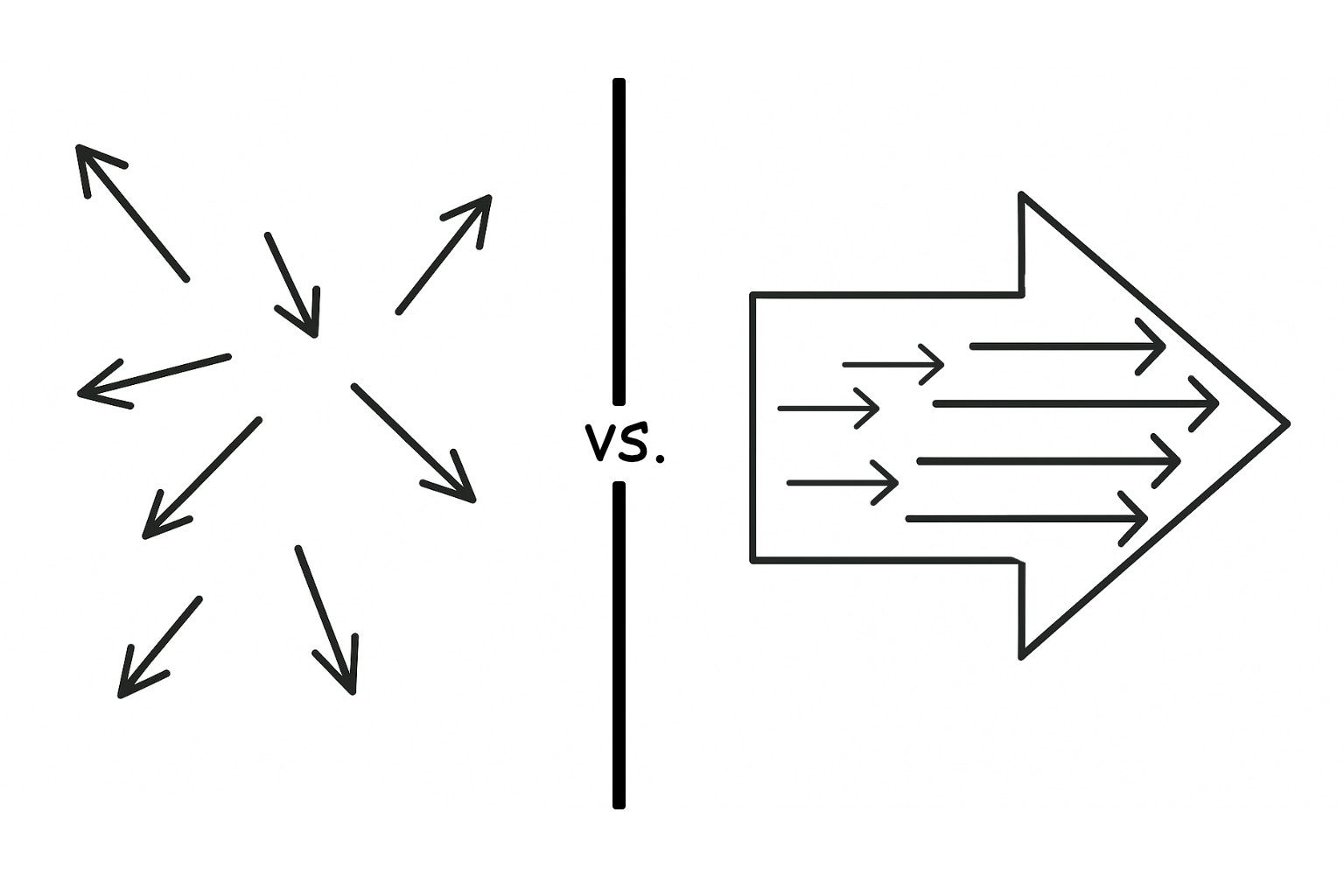
Most companies moved fast but scattered. You could see it in their announcements—Product launching features that Marketing scrambled to message, Engineering dealing with technical debt from rushed releases, customer success trying to explain why the roadmap kept shifting.
Amalakai moved differently. More unified.
He pulled up timeline data. The typical company in the report took three to four weeks from insight to coordinated market launch. Amalakai was doing it in three to four days.
James opened Dayanos’s last product launch retrospective. Six weeks from initial decision to market. And it hadn’t even been coordinated—Product had shipped features, Marketing had scrambled to create messaging, Engineering had dealt with bugs afterward, Customer Success had fielded confused customer questions.
The gap wasn’t 10x. When you factored in quality, market impact, and customer adoption, it was closer to 30x.
They weren’t just slower than Amalakai. They were playing a completely different game.
He pulled out his phone and texted Sam: “Found something in that industry report. Need to show you.”
The response came immediately: “Tomorrow morning. 9am. What did you find?”
James looked at his screen. Amalakai’s positioning. Their movement speed. The 30x gap.
“The pattern you mentioned. And the company that’s already practicing it.”
Speed Only Works When Systems Exist
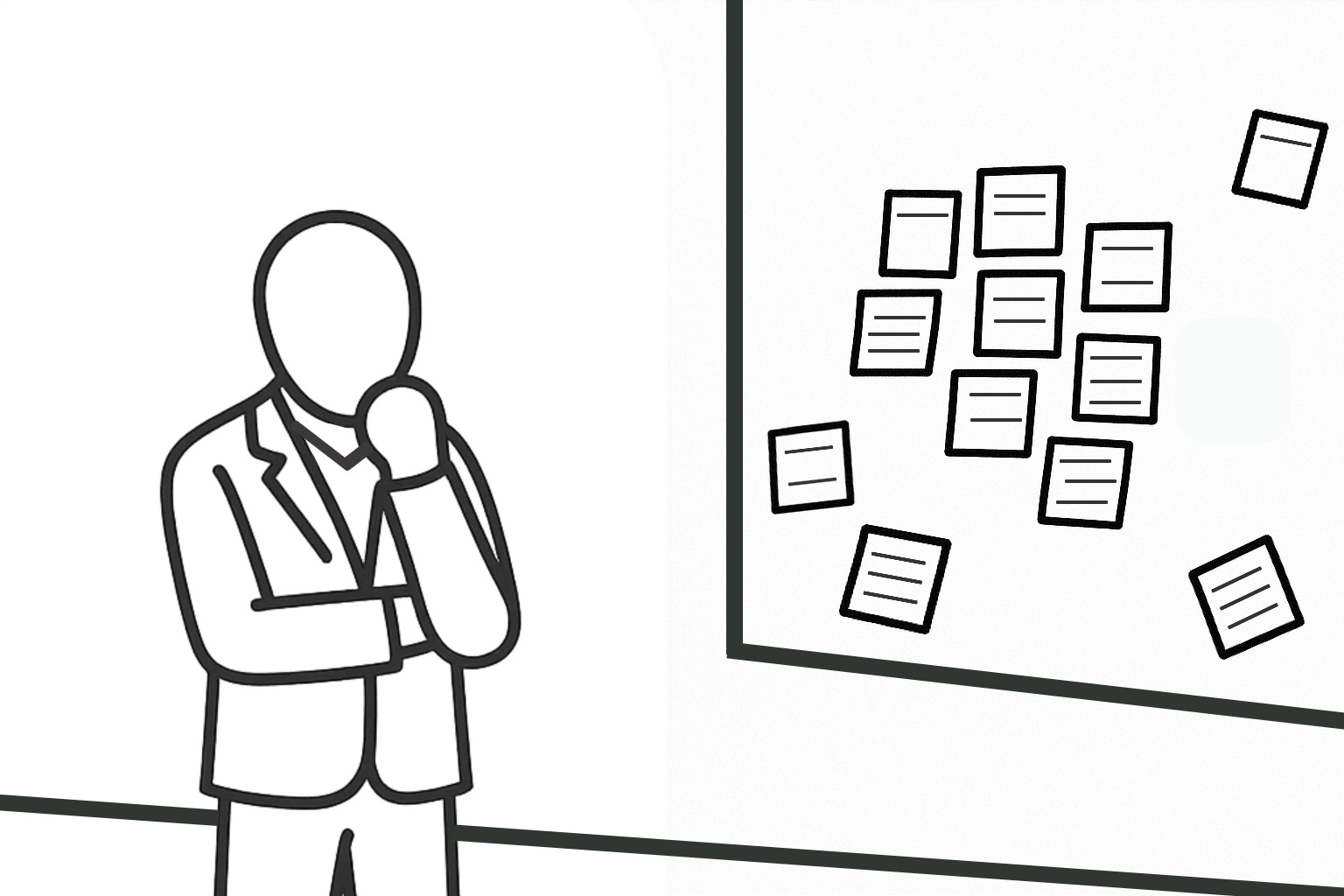
Sam walked in to find James’s office transformed. Printouts covered the desk. The whiteboard was filled with competitor analysis, customer interview notes, positioning timelines. Post-its clustered by theme.
“You’ve been busy,” Sam said.
“Look at this.” James pulled up Amalakai’s profile on his screen. “Six months ago, they were where we are now. Good product, growing customer base, coordination chaos. Then something changed.”
James showed the comparison data. “Three to four days from decision to coordinated market launch. We take six weeks. And their launches work—integrated messaging, aligned features, customers adopt immediately.”
“Hmm, the 30x effect,” Sam said quietly.
“I validated the hypothesis. Eight customer calls over two days.” James gestured to the wall of post-it notes. “Every single one said the same thing in different words: they need decision systems, not dashboards. They need to transform how they make decisions, not just see their operations better.”
He pulled up Ramorian’s exit interview. “This was in our notes the whole time. ‘We loved seeing what was happening, but we couldn’t decide what to do about it fast enough.’ I read it as a visibility feature request. It was a decision system requirement.”
Sam sat down, studying the research. “So what do you want to do?”
“I want to show my team. Get everyone seeing what I’m seeing.” James pulled up his calendar. “This afternoon. I’ll get everyone in the war room, walk them through the customer feedback, show them Amalakai’s movement, explain what we’re missing—”
“Slow down.” Sam’s voice was gentle but firm. “Remember our conversation about your calendar? When you wanted to combine all your meetings immediately?”
James paused. “You said that was rearranging deck chairs instead of fixing the navigation system.”
“And what stopped you from doing it?”
“You said I needed to understand the transformation first. Then figure out what context enables it. Then—only then—redesign the meeting structure.”
“Right.” Sam stood and walked to the whiteboard. “So what’s different now?”
“I understand the transformation. Decision systems, not dashboards. Judgment speed, not execution speed.”
“Do you know how to build it?”
James froze.
“You have the diagnosis,” Sam continued. “You see the pattern. You understand what’s wrong and what’s needed. But do you know the architecture? The actual system that creates unified judgment?”
“Not yet,” James admitted.
“Then here’s what’s going to happen if you gather your team this afternoon and show them this research.” Sam tapped the Amalakai analysis. “They’re going to have the same reaction you did with your calendar. ‘Okay, so let’s reorganize. More cross-functional meetings. Better alignment sessions. Shared planning documents.’ They’ll try to bolt decision architecture onto execution systems.”
“So I shouldn’t show them?”
“I didn’t say that.” Sam smiled. “I said if you show them without structure, they’ll default to what they know. More meetings. More process. More coordination overhead. The very thing that’s killing your Decision Velocity.”
James looked at his research. He’d spent two days validating the hypothesis, seeing the pattern, understanding the gap. And now Sam was telling him to wait.
“We have fifty-seven days,” James said. “Amalakai is already ahead. If we don’t move—”
“Moving fast without the right architecture is what got you here,” Sam interrupted. “Six months of fast execution building the wrong thing. Now you want to move fast again—teach your team Decision Velocity before they see why it matters, implement frameworks before you understand the system.”
Sam gestured to the whiteboard. “You’re still thinking in execution mode. How fast can we implement? How quickly can we reorganize? But transformation doesn’t work that way. You need architecture first. Then speed amplifies the right structure instead of the wrong one.”
James felt frustration rising. “So what do I do? Just... wait?”
“No. You prepare.” Sam pulled out a chair. “Here’s what I’m proposing. You try it yourself first. This afternoon. Get your team together, show them what you’re seeing, teach them Decision Velocity. See what happens.”
“You want me to fail?”
“I want you to see WHY structure matters. You can’t teach your team without understanding the system yourself. And right now, you understand the diagnosis. You don’t understand the treatment.”
Sam leaned forward. “After you try—and you’ll see the gap between knowing and implementing—we’ll do a proper workshop. Your leadership team. I’ll facilitate. But you need to feel the difference between understanding a concept and practicing it.”
James looked at his research spread across the office. Customer validation. Competitive analysis. The 30x gap. He had all the pieces. But Sam was right—he didn’t know how they fit together into a working system.
“And that workshop,” James said. “What would that look like? Engagement-wise?”
“Three days with your leadership team. I’d need to clear my calendar, move some client work.” Sam paused. “I can do it as a project. My standard rate.”
“Send me the details,” James said. “If this is what it takes to compete with Amalakai, it’s worth it.”
“I’ll send over a proposal tonight. But James—try it yourself first. You need to see the gap before the workshop makes sense.”
“Okay,” James said. “I’ll try it this afternoon. My way. See what happens.”
“Good.” Sam stood to leave. “And James? When you call me tonight—because you will—remember this isn’t failure. It’s learning what you don’t know. That’s actually progress.”
Implementation Exposes What Insight Hides
James stood at the whiteboard in the main conference room. His leadership team sat around the table: Product VP, Marketing VP, Engineering Director, Customer Success lead.
“What’s this about?” the Product VP asked, checking her phone. “We have sprint planning in an hour.”
“Cancel it,” James said. “This is more important.”
The Marketing VP exchanged a glance with Engineering. James caught it. They thought he was overreacting to the board meeting. Again.
“I figured out why we lost Ramorian,” James said. He pulled up the customer interview themes on the screen. “And why we’re going to keep losing if we don’t change something fundamental.”
He wrote on the whiteboard:
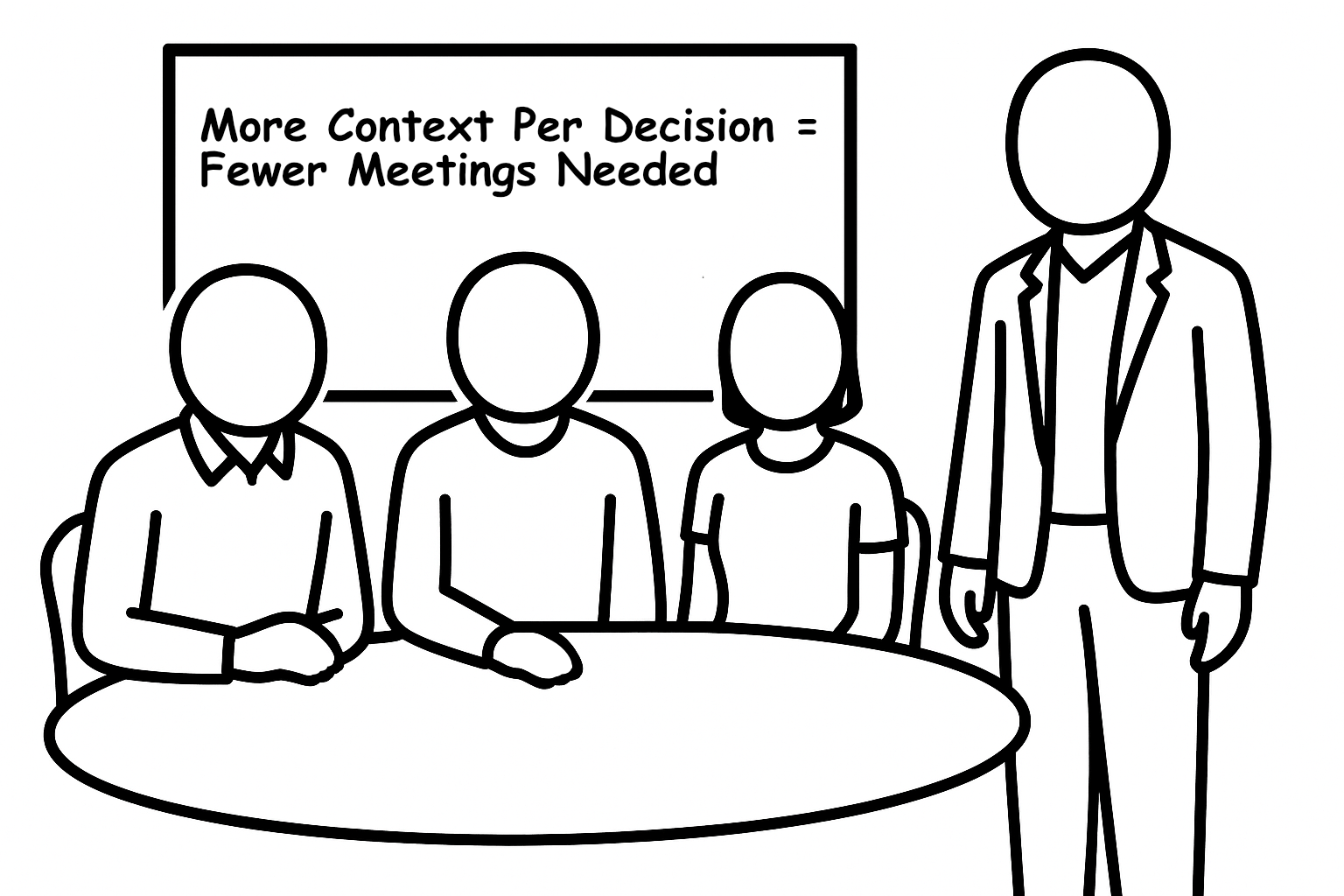
More Context Per Decision = Fewer Meetings Needed
“This is what we’re missing. Decision Velocity—how fast we can make quality decisions as an organization.”
The Engineering Director studied the equation. “So if everyone has more context, we need fewer coordination meetings?”
“Exactly.” James felt the energy building. “Right now, we’re stuck in coordination theater. Most of our meetings don’t produce decisions—they just try to align separate workstreams.”
He clicked to the next slide. “But companies like Amalakai?” He showed the comparison. “They’re operating at ten decisions per meeting. That’s where the 30x effect comes from. When you integrate more context per decision, you need fewer coordination meetings, which means you can decide faster with better quality.”
The Product VP leaned forward. “Who’s Amalakai?”
“Competitor. They were in our position six months ago—good product, coordination chaos. Now they’re moving at thirty times our speed. Three days from decision to coordinated market launch. We take six weeks.”
“How?” the Marketing VP asked.
James wrote it on the whiteboard. “They’ve architected their organization around unified judgment. Product, Marketing, Engineering—they all see the same strategic picture. So their decisions naturally integrate multiple perspectives. They don’t need alignment meetings because they’re already aligned.”
The room was quiet. James could see them processing.
“So you’re saying we need more context integration?” the Marketing VP said slowly.
“Yes. Exactly.”
“Okay, so... we schedule cross-functional planning sessions? Weekly syncs where Product, Marketing, and Engineering all attend?”
“No.” James shook his head. “That’s more meetings. We need fewer meetings.”
“But you just said we need more integration...”
“Through shared context. Not more meetings. Everyone seeing the same strategic picture, so coordination happens naturally.”
The Engineering Director raised his hand. “What does ‘shared context’ actually mean? Like, tactically?”
James wasn’t sure. He knew what it meant conceptually. But tactically? How do you actually build it?
“It means...” He looked at his notes. “Everyone seeing the same strategic picture. So decisions integrate multiple perspectives without requiring coordination meetings.”
“Right, but HOW?” the Product VP pressed. “Do we all attend each other’s planning sessions? Do we create shared documents? What’s the actual process?”
“The process is...” James scrambled. “You build context areas. Strategic domains where you need clarity. Then you ensure those context areas are visible to everyone who makes decisions.”
“What’s a context area?”
“It’s...” James pulled up his notes from Sam. “It’s a domain of strategic understanding. Like customer transformation goals. Or competitive positioning. Or technical architecture constraints.”
The Product VP tilted her head. “So... documentation? We document our strategy better?”
“Not just documentation. Living context. Shared understanding that updates as things change.”
“How does it update?” the Engineering Director asked. “Who maintains it? What format does it take?”
James felt the meeting slipping away from him. He had the concept. He understood the theory. But the implementation questions—how context actually flows, who owns what, what systems enable it—he didn’t have answers.
“Look,” he said, pulling up the Amalakai comparison again. “I don’t have all the tactical details yet. But I know we’re thirty times slower than companies that are practicing this. I know our customers are leaving because we can’t help them decide faster. I know we spent six months building the wrong thing because we weren’t integrated.”
The Marketing VP spoke carefully. “James, I want to understand this. Really. But I think we need more than a concept. We need a process. Actual steps we can implement.”
“I think,” the Product VP said gently, “we need to bring in someone who’s actually implemented this. Someone who can show us the system, not just the concept.”
James looked at the whiteboard. Contextual decisions per meeting. The 30x effect. Amalakai’s movement speed. Customer quotes about needing decision systems.
He had the diagnosis. He understood the pattern. But his team was right—he didn’t have the treatment.
“You’re right,” he said finally. “I have someone who can help. Let me... let me set that up.”
The meeting ended twenty minutes later. No decisions made. No alignment achieved. Just more questions and a team that looked at James with a mix of concern and confusion.
After everyone left, the Marketing VP stopped at the door.
“James, whatever happened at that board meeting—it clearly shook you. And I think you’re onto something here. The customer feedback is real. But we need structure to make things work.”
She was right. He’d given the pattern without the process.
Transformation Requires Architecture
His phone buzzed. A text from Sam. “Workshop proposal in your inbox as discussed. Three days, your leadership team. Let me know.”
James opened the proposal. Professional. Detailed. Not cheap. But looking at his whiteboard covered in half-formed concepts and his team’s confused faces, the investment was obvious.
He typed back: “Confirmed. Let’s do it.”
Then he pulled up his calendar and sent an invitation to his leadership team:
“Strategy Workshop - 3 Days - Details to follow”
James looked out his window at the city lights. Somewhere out there, Amalakai was moving at 30x speed, systematically repositioning while Dayanos struggled with coordination theater.
But for the first time since the board meeting, James felt like he was moving in the right direction. Not fast—Sam had taught him the difference between speed and direction. But systematic. Toward the architecture that would let them compete.
He opened his customer interview notes one more time. Eight conversations. Eight variations of the same insight: We need decision systems, not dashboards.
Dayanos had spent six months building the wrong thing because James had been optimizing for execution speed instead of judgment speed.
Tomorrow, he’d learn how to build the systems that made decision velocity possible. And what unified judgment actually looked like in practice.
54 days left.
PRACTICE: The Compression Test
Time: 2 minutes
Think of a strategic initiative currently in progress—something that’s taking weeks or months to move forward.
Ask yourself: What would this look like if it happened 30x faster?
Write one sentence about what’s actually slowing it down.
AI PROMPT:
The initiative that’s moving slowly is: [Your initiative]

If it moved 30x faster, here’s what would change: [Describe the compressed timeline]

What’s actually slowing it down is: [One sentence—coordination overhead, missing context, unclear decision rights, etc.]

Based on this:
1. Am I optimizing for speed or for coordination overhead?
2. What would need to be true to compress this from months to days?

Show me what’s possible.
Next Episode:
Your Operating Rhythm Is Your Strategy (Now Live)
James learns that insight without architecture produces confusion, not clarity. Seeing the transformation is different from building it. His team doesn’t need more concepts—they need the system that enables unified judgment.
The workshop will expose the gap between knowing the idea and executing the practice.
54 days to turn things around.
Subscribe to follow James’s transformation journey, and share with a leader who’s watching AI accelerate their organization in three different directions.