
Hennessy’s Clever Marketing Trap with LeBron — and What Strategic Thinkers Can Learn from It
How to avoid missing a billion-dollar opportunity hiding in plain sight

The Attention Competition of Fall 2025
Early fall brings a marketing blitzkrieg. Sports leagues fiercely compete for cultural mindshare of millions of engaged, passionate audiences.
For brands, this creates both opportunity and challenge. How do you break through when every weekend delivers multiple headline-worthy moments? How do you capture attention in an ecosystem designed to generate constant storylines?
Enter LeBron James—a master of the attention economy better than any athlete of his generation. With speculation mounting in his upcoming 23rd NBA season about his potential retirement, LeBron represented the perfect vehicle for a brand seeking to cut through the noise.
Hennessy saw their opportunity.
In early October, they launched what they believed was a marketing masterstroke: “The Second Decision,” a campaign that deliberately echoed LeBron’s iconic 2010 televised announcement of his move to Miami.
It had all the elements of clever marketing—cultural relevance, celebrity power, nostalgic callback, and massive social media buzz.
But what happened next reveals something every strategic thinker should understand about the difference between clever marketing and clear messaging that cuts through.
Hennessy’s Clever Marketing Trap
The campaign generated enormous attention around LeBron’s retirement speculation.
When the reveal came that it was actually a Hennessy announcement, the narrative immediately shifted to disappointment about the fake-out and speculation about Lakers’ season storylines.
Hennessy fell into the Clever Marketing Trap: when a message impresses the maker more than it moves the market.
The Second Decision had classic symptoms.
The industry applauded the cultural relevance and celebrity integration.
Marketing outlets called it clever. Social media buzzed.
But sophisticated execution impressed the makers far more than it moved the market. LVMH stock remained flat despite massive buzz.

The business fundamentals that the campaign was designed to address—declining cognac sales and weakening demand—didn’t change.
A stunt can’t rescue a shrinking category.

The attention economy rewards campaigns that entertain and surprise. But entertainment doesn’t equal action. People can admire your creativity and still do nothing differently.
Most importantly, the customer was never the hero. The only measurable lift was LeBron’s mentions and follower count.
Hennessy played the supporting role, and potential customers stayed spectators to someone else’s story.
The Hidden Billion-Dollar Strategy
Hennessy was sitting on marketing gold—waiting to be leveraged from a LeBron James signature gesture. They even tried to use it, but it was overshadowed by the nostalgic callback to The Decision.
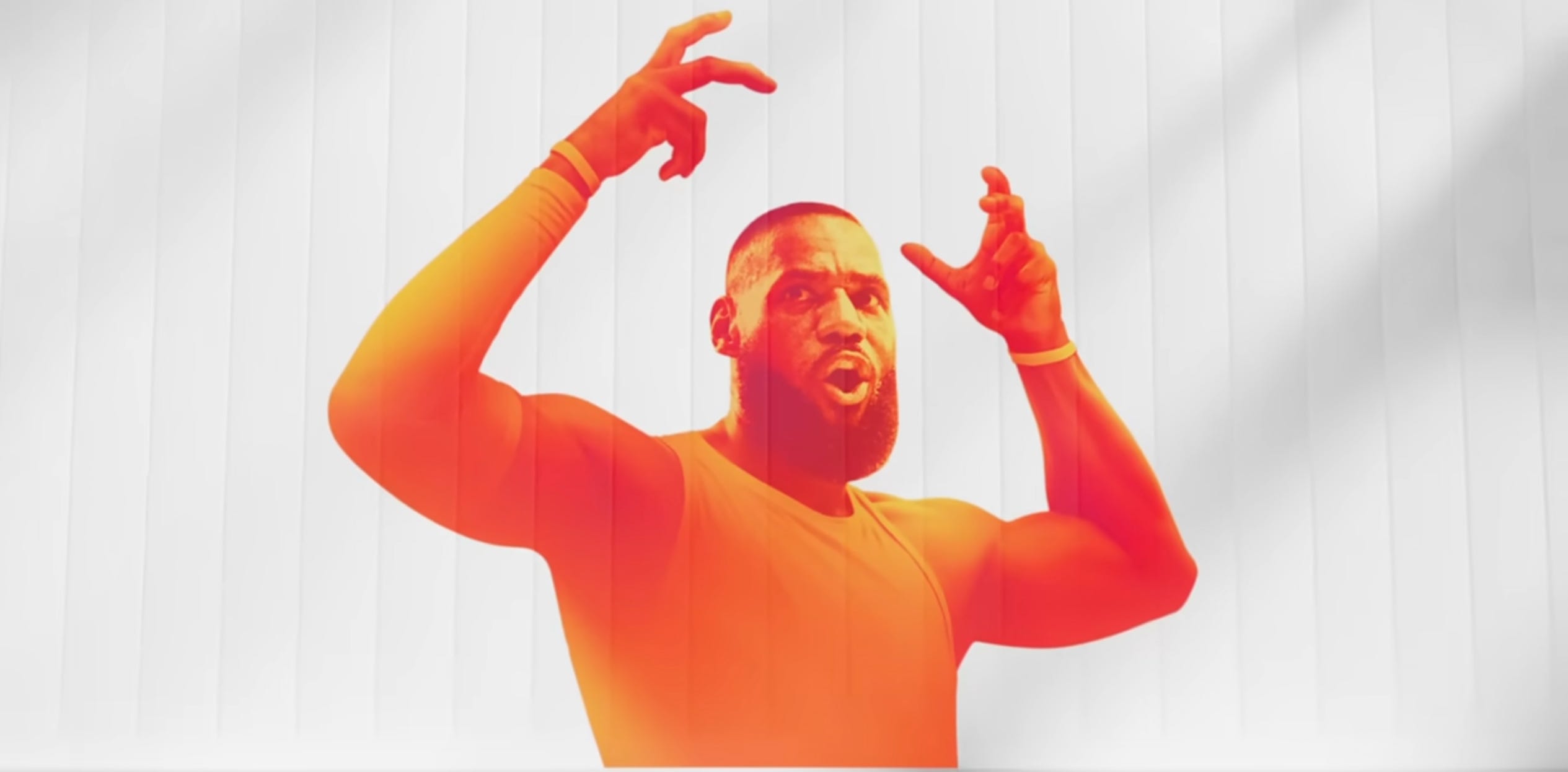
The gesture where he crowns himself was right there. Nike had just amplified it in their Forever King campaign. But instead of LeBron crowning himself—or crowning Hennessy—he could have invited customers to crown themselves.

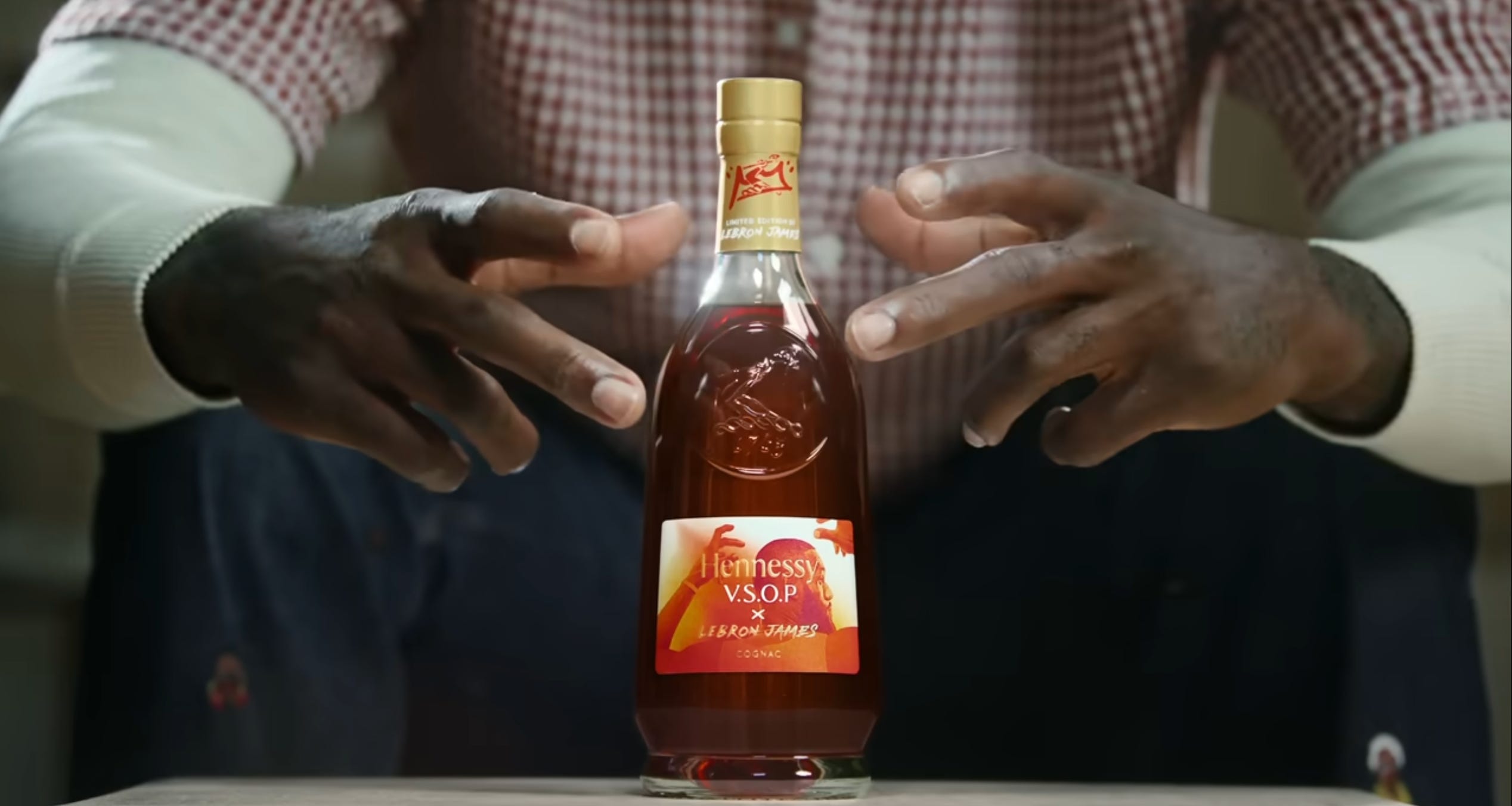
In the opening seconds of The Second Decision, LeBron crowns himself—then crowns the Hennessy V.S.O.P. bottle.
The gesture that could have built a category vanishes in two seconds.
Strategically, that moment was the blueprint. In a declining category, growth doesn’t come from stealing market share; it comes from expanding usage occasions.
Hennessy needed customers to reach for cognac more often, across more contexts, with emotional permission to do so.
Crown Yourself would have delivered that shift. It tells people: don’t wait for someone else to acknowledge you—celebrate yourself. Small wins, private milestones, everyday achievements become legitimate occasions.
That’s the psychological unlock. Traditional cognac signals external validation—special nights, awards, toasts. Crown Yourself repositions it as self-recognition. You decide when to celebrate. You hold the crown.
Now the competitive set changes. Hennessy stops fighting within the shrinking cognac aisle and starts competing with products tied to celebration moments. When customers think, I don’t need permission to celebrate, Hennessy enters thousands of new occasions that used to belong to other categories.
The research question transforms from “When do people drink premium cognac?” to “When do people celebrate achievements but don’t feel they deserve a celebration?” That reframing expands the addressable market and redefines the product’s role—from luxury indulgence to personal empowerment ritual.
That is the billion-dollar strategy hiding in plain sight.
The Strategic System Hennessy Didn’t Use
The question becomes: how do you spot opportunities like this before competitors do? The answer lies in using the Strategy Flywheel™ to ask the right questions in the right sequence.
Customer Outcome Focus
Hennessy never defined what customer transformation they were creating. The campaign was about LeBron’s hero story, not the customer’s. If you knew nothing about Hennessy and saw “The Second Decision,” you’d have no idea what you were supposed to feel or do.
And this is what makes it worse—Hennessy almost certainly has millions of dollars in customer research sitting on servers that already show this truth. The data is there. The insight wasn’t used.
As an outsider with nothing more than public information and access to ChatGPT, I surfaced it in minutes: Hennessy drinkers want to feel worthy of celebrating their own achievements. They crave permission to recognize their wins without waiting for external validation.
That single insight would have done exactly what the LeBron partnership was meant to achieve—activate loyal customers and invite a broader audience into the brand’s orbit.
Zeitgeist Leverage
The zeitgeist was already validating “Crown Yourself” behavior.
Across social media, people publicly toast their promotions, birthdays, and “small wins.” The language of self-recognition is everywhere. Influencers talk about “main character energy.” Athletes post their own highlight reels. The cultural permission structure for self-celebration is fully built.
Hennessy didn’t need to invent the behavior—and already had the perfect symbol for it. They had a year-long partnership with the master of the gesture, fresh validation from Nike, and a customer base primed to participate.
All they needed was a single line of strategic permission: “Crown Yourself.”
Engineering the Journey
Once you have customer outcome clarity, the experience architecture writes itself.
LeBron watching his achievements, crowning himself, then inviting viewers: “What are you crowning yourself for today?” Every element serves the customer transformation.
Instead of retirement speculation, show the progression from achievement to self-recognition to celebration. Make the customer the hero of their own crowning moment.
Constraint Clarity
The Second Decision was clever but directionless—an echo of 2010 television theater in a 2025 social media world. Back then, spectacle was the medium. Today, participation is.
That’s the real strategic miss. The campaign borrowed the format of mass broadcast when the cultural power had already shifted to personal expression. In an era where audiences post, remix, and crown themselves online every day, Hennessy recreated an old-world announcement instead of building a new-world invitation.
Crown Yourself authenticity would have supplied the missing filter. Every creative choice could have passed a single test: Does this help customers crown their own achievements?
Anything that didn’t serve self-recognition would be cut.
Every line, frame, and asset would invite participation rather than applause.
That constraint transforms creativity from cleverness into clarity.
Crowning the Customer
This is where the opportunity turns devastating. Every LeBron milestone—records, awards, personal wins—could have become a shared celebration moment. Each time he crowned himself, Hennessy could have amplified it, then invited customers to do the same.
That’s how you turn a single ad into an ongoing ritual.
Each LeBron achievement becomes a cultural spark; each customer response becomes proof of participation.
A simple prompt—“What are you crowning yourself for today?”—could have extended the campaign all year. Social posts, bottle labels, limited runs tied to community achievements. A system that transforms individual milestones into collective momentum.
Instead, the campaign stayed a one-time stunt.
No follow-through. No architecture to sustain belief or behavior.
Momentum died where it should have multiplied.
The Opportunity Window Left Open For Another Brand
While Hennessy spent millions on a clever campaign that collapsed into a meme, it accidentally paved the runway for Crown Royal to build the category Hennessy should have owned.
The cultural groundwork is already done—achievement, self-recognition, the crowning gesture. Crown Yourself fits Crown Royal’s name, heritage, and visual identity so perfectly it almost feels preordained.
They could execute it tomorrow. The everyday version of what Hennessy missed.
A promotion at work. A marathon finish. A degree earned. A deal closed.
“Crown Yourself—with Crown Royal.”
The alignment is so clean it doesn’t even require a celebrity. Just real people celebrating real wins. While Hennessy struggles to explain its fake-out, Crown Royal could quietly turn self-recognition into a national ritual.
And the economics are ruthless. Crown Royal could achieve category creation with a standard marketing budget, while Hennessy burned celebrity dollars to trend for twenty-four hours.
In one move, Crown Royal could seize the language, the behavior, and the emotional territory—leaving Hennessy holding the purple bag.
What This Means for Strategic Thinkers
Most leaders start with “How do we grow revenue, profit, or market share?” It’s logical, but it keeps focus on lagging indicators instead of leading ones.
Legendary leaders ask, “Who is our customer, what quest are they on, and how do we guide it?”
Once you understand that quest—base camp, summit, obstacles—everything aligns. Cultural signals reveal themselves. Experience architecture designs itself. Customer transformation becomes the organizing principle.
And the revenue, profit, and market share happens as a byproduct.
Hennessy had all the ingredients for legendary leadership: LeBron, timing, cultural momentum. But they stayed at the level of most leaders—“How do we get more attention?”
The billion-dollar opportunity required the legendary question: “How do we help customers crown their own achievements?”
The transformation is simple but demanding: make your customer the hero, and make your product the guide.
Do that, and clarity stops being luck—it becomes system.
Most stop at the spectacle. The market move was bigger: a chance to reframe celebration itself—shifting from celebrity validation to customer coronation—and redefine the category from luxury indulgence to everyday empowerment—if executed.
The following strategic analysis is based solely on publicly available information, including social media posts, press coverage, and marketing campaigns. It represents an educational exploration of strategic thinking methodology and does not constitute investment advice. The author has no business relationship with LMVH, Hennessy, or Lebron James and may, in the future, consider potential investment or advisory opportunities with companies analyzed.
[ENTERING THE STRATEGY WAR ROOM: HENNESSY’S “THE SECOND DECISION”]
For operators who need to understand spirits positioning wars, category creation opportunities, and why Hennessy’s LeBron campaign represents a billion-dollar strategic miss.
