
Context That Travels: How Category Owners Build Clarity That Compounds
Clarity is velocity.

While you take three meetings to make one decision, your competitor makes three decisions in one meeting.
Every strategic decision in your organization requires your presence because you’re the only one who knows why.
So you show up. Meeting after meeting. Explaining the same logic. Translating strategy into decisions.
Not the what—your team has that. Not the how—they’ve got process. The why. The context that turns information into judgment.
Your calendar is proof of your value. It’s also proof of your constraint.
The bottleneck you built started with good intentions.
Early on, you were the one who could see connections others missed. You understood why certain decisions mattered, which tradeoffs were acceptable, what the strategy actually required. When questions came up, you had answers. When conflicts arose, you could resolve them. When the path forward wasn’t clear, you made it clear.
So people started asking. And you kept answering.
Now your calendar tells the story. Decision meetings. Alignment sessions. “Quick syncs” that run forty-five minutes because the real question wasn’t on the agenda—it emerged once you were in the room and could provide context no one else had.
Your inbox tells it too.
“Can you weigh in on this?”
“Need your perspective before we move forward.”
“Wanted to run this by you.”
Each request is reasonable. Each decision genuinely benefits from your judgment. Each meeting solves a real problem.
And each one confirms the same thing: you’re the only one who can make the call because you’re the only one who knows why.
This feels like strategic leadership. It looks like engagement. Your presence in every important decision seems like exactly what a leader should provide.
But notice what’s happening underneath.
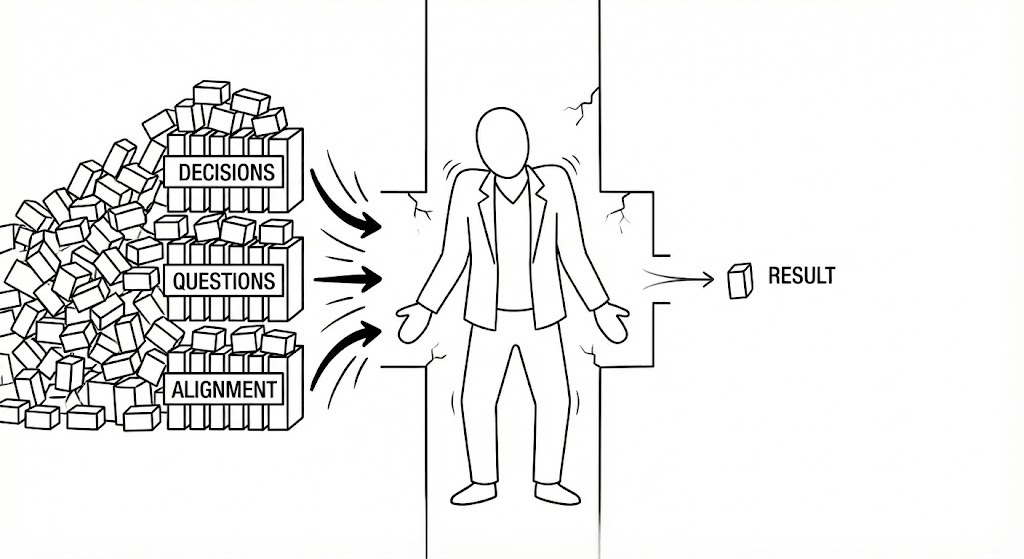
Your team isn’t developing judgment—they’re developing dependency. They’re not learning to see what you see—they’re learning to wait until you’re available. Every time you provide the context live, you confirm that the context lives in you.
The bottleneck isn’t a flaw in the system. You are the system.
And the system only moves as fast as your calendar allows.
Your calendar is full because your decision architecture is empty.
That’s the tax you don’t see on any balance sheet. Every decision that requires your presence is a decision that waits for your availability. Every meeting where you provide context live is a meeting that has to happen again next time the same question arises.
The math is brutal.
Three meetings to make one decision. Fifteen strategic decisions per week means forty-five meetings. That’s your entire calendar. And somewhere in the margins, you’re supposed to find time to actually think strategically.
But the personal cost isn’t even the expensive part.
The real tax hits the organization. While you’re in meeting three of three, explaining the same context you explained last month, opportunities are closing. Competitors are moving. Decisions that could happen in a Slack thread wait for your calendar to open up.
Your team isn’t slow. They’re waiting. Waiting for you to be available. Waiting for the context only you can provide.
And here’s where it compounds.
Every time you provide context in real-time, you reinforce that context lives in you. Your team learns that the fastest path to a decision is getting on your calendar, not developing their own judgment. The dependency deepens. The bottleneck tightens.
You’re not building strategic capacity. You’re spending it. Every meeting where you’re the context-provider is a withdrawal from an account that never gets deposits.
Context-building in real-time is the most expensive work you do. It doesn’t scale. It doesn’t travel. It doesn’t compound.
It just costs.
This is the story of strategic leadership at scale.
You’re involved in every decision because you should be involved. Your team needs your judgment because they haven’t developed their own yet. When you hire more senior people, this will improve. When the company matures, the dependency will ease.
The stories feel true because they’re partially true.
Your judgment is valuable. Your team does benefit from your context. Senior hires would help with capacity.
But notice what the stories share: they all assume the bottleneck is a capacity problem.
Not enough senior people. Not enough experience on the team. Not enough hours in your calendar. The solution is always more—more hires, more delegation, more efficient meetings.
So you hire. Senior leaders who have good judgment, who can make strategic calls. And within six months, they’re bottlenecks too. Now you have three calendars that are full instead of one. Three people who hold context that doesn’t travel.
You build processes. Approval workflows. Decision frameworks. Anything to distribute the burden. And the processes work—sometimes. The strategic calls still route to you because the process can tell people what to do, but not why it matters.
Here’s what the stories hide.
You’re not solving a capacity problem. You’re working around a decision architecture problem. The context that makes decisions possible lives in your head, not in your organization. No amount of senior hiring fixes that. No process compensates for it.
You’re adding capacity to a system that doesn’t scale.
If you knew that for every quarter you put into a machine, a dollar came out—how fast would you move to find every quarter in your environment?
You’d move fast. You’d organize your entire day around finding quarters. You wouldn’t hesitate, wouldn’t need approval, wouldn’t wait for someone to explain why quarters matter.
That speed? That’s what clarity looks like.
The clarity your team doesn’t have.
So they bring you quarters and ask: “Is this one worth putting in?” And you look at the quarter, look at the machine, and tell them yes or no. Every time. Because they can see the quarter but they can’t see what you see—the machine that turns it into a dollar.
This is the difference between category owners and renters.
Owners know their mechanisms. They can point to the machine—here’s why this quarter matters, here’s why that one doesn’t. The logic is visible. Transferable. Their team isn’t waiting for judgment; they’re applying a framework everyone can see.
Renters execute without understanding. They put quarters into slot machines, hoping for a payout. Sometimes it hits. Usually it doesn’t. And when someone asks why a decision was made, the answer is “because the leader said so.”
Your team isn’t renting because they’re not capable. They’re renting because you haven’t made the machine visible.
The context lives in you. And context that lives in you doesn’t travel.
Context that travels means your team makes better decisions without you than your competitors make with their CEO in the room.
Not because your team is smarter. Because they can see the machine.
When context travels, the question changes. Your team stops asking “What would [your name] decide here?” and starts asking “Given our quarter-to-dollar mechanism, what should we do?”
That’s not a semantic difference. That’s an operational transformation.
Decisions start happening at the point of information—where the data lives, where the opportunity exists, where the timing matters. Not routed through your calendar. Not waiting for the next sync. The person with the information has the context to act on it.
Then your role shifts. You stop being the decision-maker and start being the machine-builder. You’re not in the room providing context—you’re the reason context exists in the room without you.
The meetings change too. Instead of three meetings to make one decision, one meeting produces three decisions. Not because people are rushing. Because they’re not rebuilding context from scratch every time. The mechanism is already visible. The conversation starts at judgment, not at explanation.
Here’s what that looks like in practice:
Your team makes a decision, then informs you. Not asks permission—informs. You find out about strategic calls after they’ve been made, and your reaction is “yes, that’s exactly right” because they applied the same framework you would have.
You’re coaching framework application, not making the call. When someone’s decision doesn’t match what the mechanism would suggest, you’re teaching—”here’s what you might have missed”—not overruling.
Decisions happen in Slack threads instead of scheduled meetings. Your calendar opens up. Not because you’re less involved in strategy, but because your strategic thinking is embedded in how everyone operates.
You’re no longer valuable because you make decisions. You’re valuable because you build decision-making capability.
The machine runs whether you’re in the room or not.
Category owners build context that travels. Renters build dependency.
You can see the difference without looking at financials. It shows up in how organizations behave.
When context travels, documentation replaces discussion.
Strategic decisions happen in written form—not because writing is required, but because the framework exists to write against. Team members reference the mechanism, not the individual. “According to our priority framework” replaces “Let me check with [leader].”
In organizations where context travels, a new hire makes a strategic decision in week three. Not because they’re exceptional—because the architecture is visible. They can see the machine. They know which quarters produce dollars.
In organizations where context doesn’t travel, that same new hire spends six months “learning how we do things here.” The knowledge is tribal. Onboarding means shadowing, absorbing, figuring out what the leader would do in each situation. The machine is invisible. The new hire learns to wait.
When context travels, decisions distribute.
You see it in where decisions happen. Slack threads instead of scheduled meetings. The person with the information makes the call because they have the context to make it well. Leaders coach framework application—”here’s how that connects to our mechanism”—not approve individual decisions.
The test is how many “alignment meetings” are on your calendar. In organizations where context travels, that number is low. Not because fewer decisions are being made—because decisions don’t require meetings. The mechanism is already shared.
In organizations where context doesn’t travel, calendars fill with alignment sessions. Every strategic call requires getting the right people in the room because the context lives in their heads, not in architecture. Speed comes from cutting corners, not from having clarity.
When context travels, the transformation story governs.
This is the deepest pattern. When conflicts arise—when priorities compete, when resources are scarce, when the path forward isn’t obvious—something has to resolve the tension.
In organizations where context travels, “the why” resolves it. The transformation story is clear enough that team members can ask “which choice advances the transformation we own?” and get an answer. Not from a leader. From the architecture itself.
The test is simple. Ask anyone on the team: “Why does this company exist?” In organizations where context travels, they all say the same thing. Not memorized mission statements—lived understanding of the transformation they’re building.
In organizations where context doesn’t travel, that question gets different answers depending on who you ask. Engineering says one thing. Sales says another. Marketing has a third version. Without shared why, every decision becomes a negotiation. Every conflict requires escalation. Every priority call needs a leader in the room to arbitrate.
Context that travels isn’t just philosophy. It’s measurable.
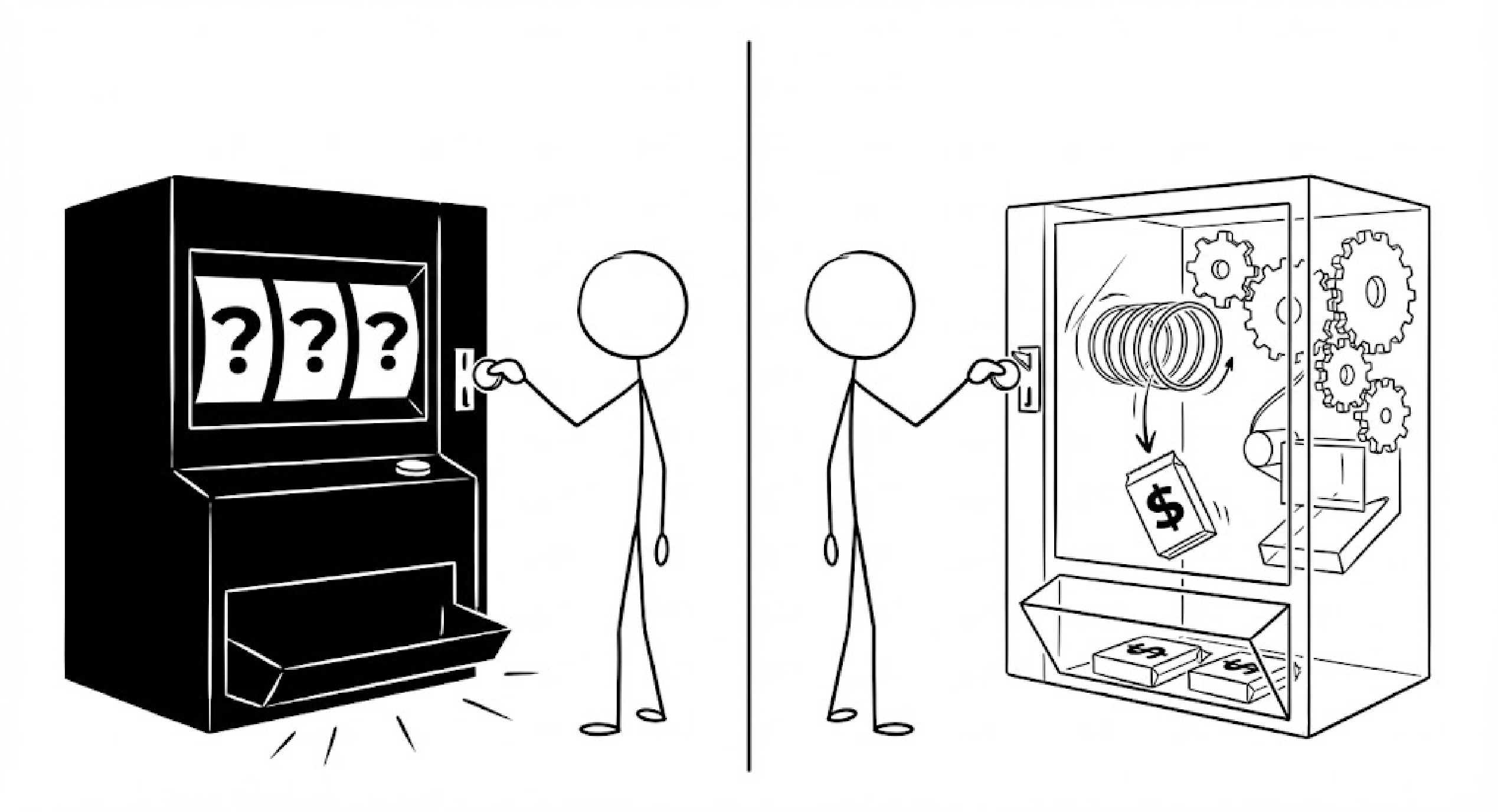
Think back to the vending machine.
When you lack context clarity, you’re putting quarters into a slot machine. Pull the lever, hope for a payout. Maybe the decision works, maybe it doesn’t. No mechanism knowledge. Every choice is a gamble.
When context travels, you’re putting quarters into a vending machine. You know what you’ll get before you press the button. The mechanism is visible. Decisions become predictable.
The difference is access.
One access point means one type of decision can happen without you. Your team knows the mechanism for that domain—they can engage and get the right outcome. Everything else still routes through your calendar.
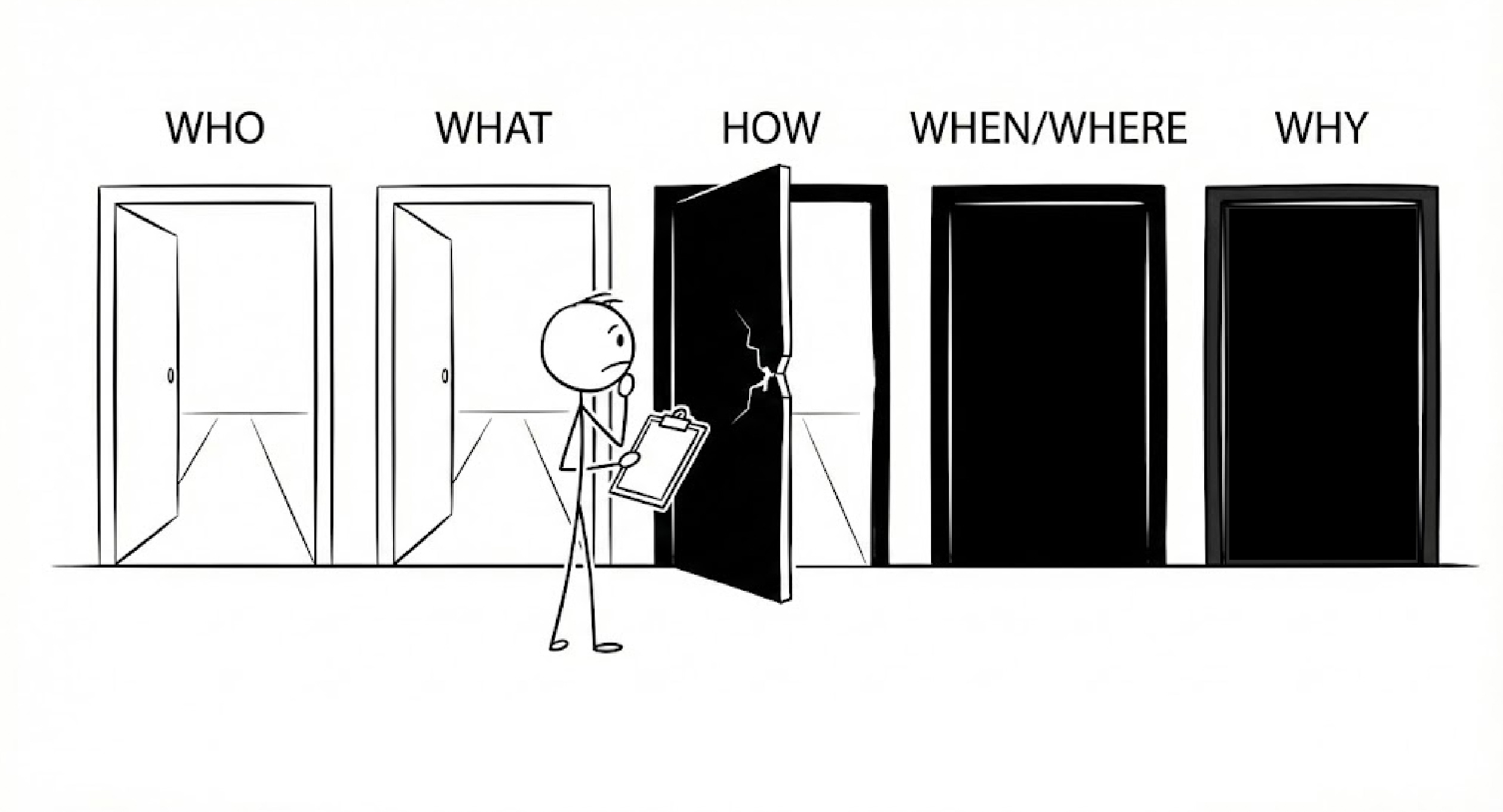
Context travels through five access points. Each one is a type of decision your team can make without you.
WHO gets assigned to what problem—that’s People Mobilization. WHAT metrics drive behavior—that’s Performance Measurement. HOW work flows through the organization—that’s Process Architecture. WHEN to say yes and WHERE to focus—that’s Priority Focus. WHY this company exists—that’s Prime Positioning.
Most leaders have clarity in two, maybe three areas. That’s why they’re still the bottleneck. The missing access points are where context lives in your head instead of your architecture.
Here’s what changes when context travels.
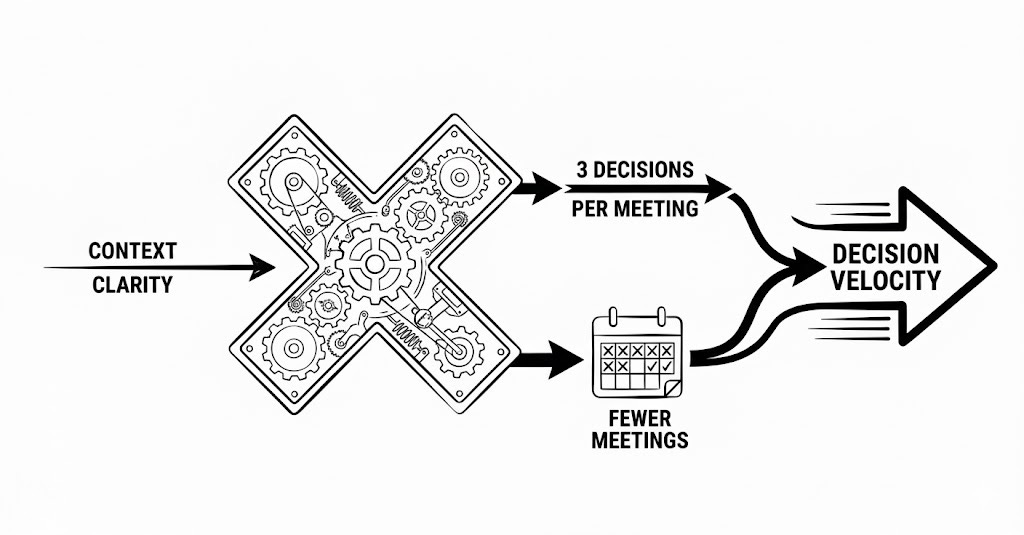
Your team makes three decisions in one meeting. Same calendar. Same hours. Different throughput.
That’s not meeting efficiency. That’s different math:
Decision Velocity = Context Clarity × (Decisions / Meetings)
One access point open: you’re still the bottleneck. Three access points: you’re partially unlocked. Five access points: you’re no longer in the meeting.
The change isn’t incremental—it’s exponential. Each access point you open multiplies what your calendar can produce.
Why most leaders stay stuck: they confuse strategy documents with decision architecture.
Strategy documents describe what you decided. Decision architecture explains how to decide.
Documents sit in SharePoint. Decision Architecture travels.
Your team doesn’t need another strategy deck. They need access to the machine.
Strategy leaders who build context that travels move from being the decision-maker to being the machine-builder.
Here’s what that unlocks.
Your calendar frees up—not because you’re less involved in strategy, but because your strategic thinking is embedded in how everyone operates. The meetings that used to require your presence happen without you. The decisions that used to wait for your calendar get made when the opportunity surfaces.
You stop running the machine and start building better ones. Instead of providing context live, you’re improving the architecture that makes context travel. Your expertise compounds through the organization rather than being spent in every meeting.
New hires become productive in weeks instead of months. They’re not waiting to absorb tribal knowledge—they’re accessing architecture. They can see the machine. They know which quarters produce dollars.
But here’s the value that matters most.
Decisions happen at the speed of opportunity—whether the opportunity is discovered by you or your team.
That’s the shift. When context travels, it doesn’t matter who surfaces the information. The person with the insight has the architecture to act on it. They’re not routing it to your calendar. They’re not waiting for the next sync. They’re deciding—and deciding well—because they have access to the same mechanism you do.
Your organization stops moving at the speed of your availability. It starts moving at the speed of the market.
The competitive footnote writes itself.
While your competitors take three meetings to make one decision, your team makes three decisions in one meeting. Same calendar. Same hours. Different throughput.
Over a quarter, that compounds. Over a year, you’re not slightly ahead—you’re operating in a different timeframe. They’re still building context in real-time while your context travels without you.
Competitors can copy your tactics. They can’t copy your decision architecture. That only comes from building context that travels.
Building context that travels starts with knowing where it doesn’t.
Here’s your diagnostic. For each of the five access points, ask yourself: if I wasn’t in the room, could my team make the right call?
WHO (People Mobilization): Could they assign the right person to the right problem without asking you?
WHAT (Performance Measurement): Would they optimize for the right metric without checking first?
HOW (Process Architecture): Would they follow the right operating rhythm without your guidance?
WHEN/WHERE (Priority Focus): Would they say no to the right things without your judgment call?
WHY (Prime Positioning): Would they make decisions that reinforce your transformation story without you in the room?
Count your yeses. That’s your ownership baseline.
Two or three? You know where the bottleneck lives. The areas where you said no—that’s where context isn’t traveling. That’s where your calendar fills. That’s your highest-leverage work.
Don’t try to solve all five at once. Pick the one that costs you the most meetings. Document that mechanism first. Make that context travel. Then move to the next.
One access point at a time. That’s how decision architecture gets built.
P.S. — Strategy is a performance job. But there’s no good way to practice.
You can hire consultants—spend six figures to have someone diagnose what’s not working. And even then, you might not fix the actual issue. Because they’re telling you what context isn’t traveling without giving you a way to build the muscle.
I’m working on a tool called MyClaritySprint. It helps you diagnose where your context isn’t traveling and gives you practice drills to make it stick. Still early. Still testing.
If you’re interested in being part of shaping it, reply below. I’d value your input.