
Why Claude AI’s “Keep Thinking” Campaign Fell Into the Clever Marketing Trap (And What To Learn From it)
How Anthropic confused contemplation with creation, and what could have sparked a real movement

I’m what you might call a Superconsumer of AI. Not a developer, but someone who uses AI tools daily across different platforms. Claude has become my go-to, especially since they added research capabilities. I’ve played around with Claude Code, and while I’m not a programmer, it feels more robust than other options. More versatile as a general-purpose tool.
Sure, Claude can be verbose sometimes (good for depth, challenging for concision), but here’s what I’ve realized through months of use: I’m not just prompting Claude. I’m co-creating with it.
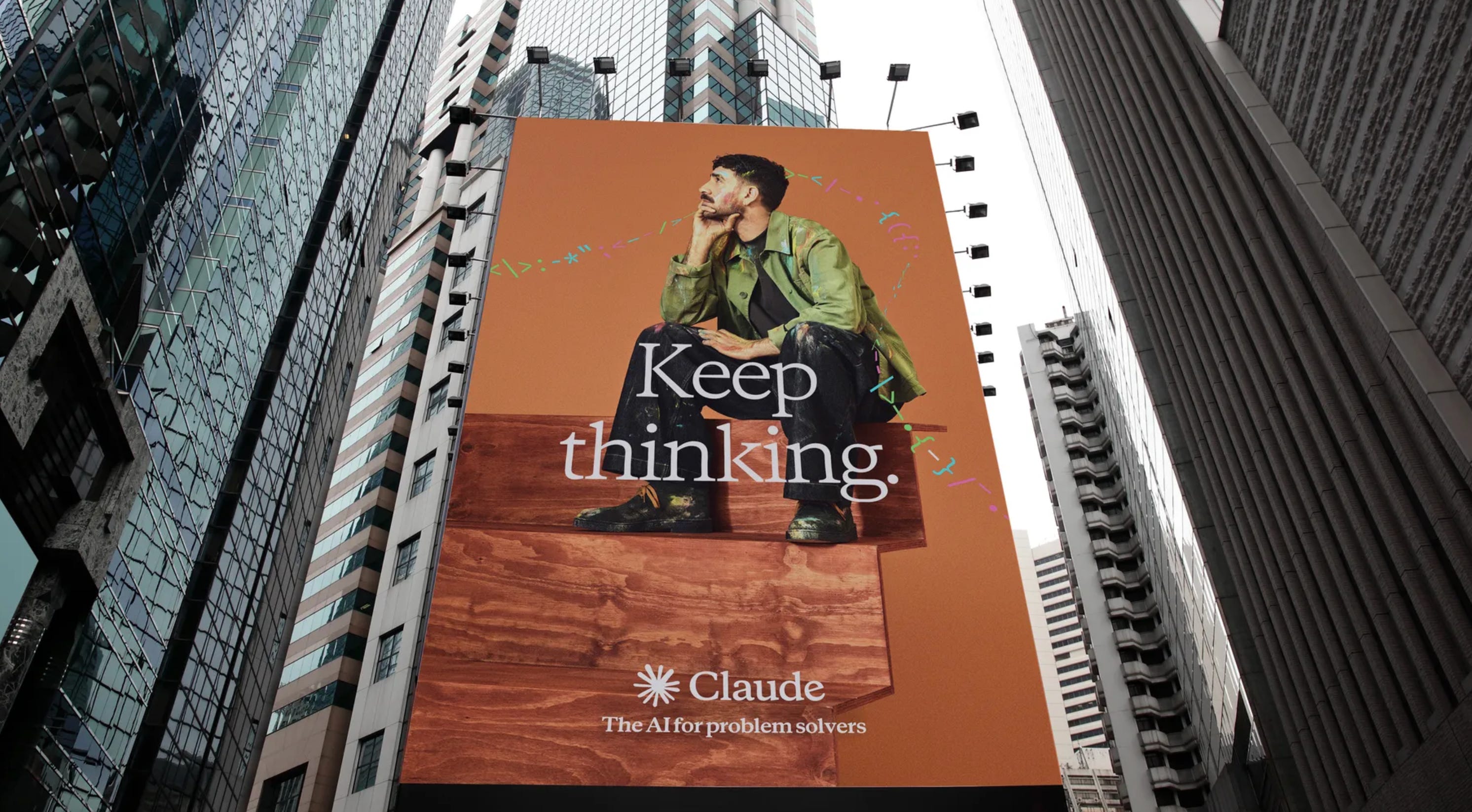
And that’s exactly why Anthropic’s first major brand campaign ”Keep Thinking” missed the mark.
The Problem with Keep Thinking
Anthropic’s Keep Thinking campaign reads as a response to people worrying AI makes us think less. But Keep Thinking sounds like homework. It’s cold, engineering-focused messaging aimed at people who’ve already chosen Claude. Meanwhile, the early and late majority they’re actually trying to reach? They need a completely different value proposition.
The campaign video demonstrates this disconnect as well. It ends with “keep creating, keep researching, keep coding, keep learning” - they were already showing the co-creation behaviors but then undermined it with Keep Thinking as the tagline. They filmed collaboration but branded it as individual thinking.
That gap between behavior and message is where campaign traction dies.
The engagement numbers on their Claude Youtube Channel hit 106k views in 2 weeks (roughly 2 % of OpenAI’s equivalent campaign traffic), with MF Doom references resonating with Superconsumers. So, they did great activating their Supers, but Supers alone can’t sustain Anthropic’s massive infrastructure costs.
Even at Claude’s top individual tier ($200/month, $2,400/year), you still need massive scale to fund AI infrastructure. Power users might hit usage limits and pay premium rates, but there’s a ceiling to how much your core audience can generate. Eventually, you need volume.
Noble goal. Wrong execution.
It’s what I call the Clever Marketing Trap—campaigns that dazzle insiders and win awards—but obscures value proposition clarity.
Clever earns applause. Clarity earns adoption.
Deeper Analysis Using The Strategy Flywheel™
Here’s how the same lens can stress-test any campaign using the Strategy Flywheel™—a framework that examines campaigns through five areas: People, Permance, Process, Prioritization, and Positioning.
People: Billboard Strategy vs. Target Reality
Billboards and commercials work for awareness, but this creates a fundamental audience confusion—who exactly are they trying to make aware?
If they were targeting developers and researchers (your current Superconsumers), Lenny’s podcast and similar creator sponsorships are more targeted and cost-effective—which they’re already doing.
Performance: Viral Potential vs. Measurement Reality
The MF Doom references show they reached their existing community, but didn’t quite cross the chasm to the mainstream.
But here’s where Keep Thinking really falls short: it has almost zero positive viral potential, but significant negative meme risk. You can imagine TikToks mocking Claude saying “Keep thinking... keep thinking...” while never returning anything useful.
Keep Thinking doesn’t describe the actual interaction experience either. When someone sees that billboard, they think “Keep thinking about what?”
Process: Broad Marketing vs. Community Building
Just getting your name out there doesn’t drive usage. Traditional ad campaigns are expensive reach with hard attribution. But the right message creates earned media that extends your reach exponentially for a fraction of the cost.
The campaign video, to its credit, did show different user types jamming on hard problems, which they could have leaned into more by leveraging content from the existing user community.
Prioritization: Brand Recognition vs. User Value Clarity
The campaign prioritizes making people know about Claude over making them understand what Claude enables. Keep Thinking tells people what to do, not what they become or achieve.
Positioning: AI Brand Awareness vs. User Summit Definition
Anthropic is trying to solve an awareness problem when the real problem is people don’t know what summit Claude helps them reach. Brand recognition without value clarity just creates expensive noise.
The “Let’s Jam!” Alternative: How It Would Have Worked
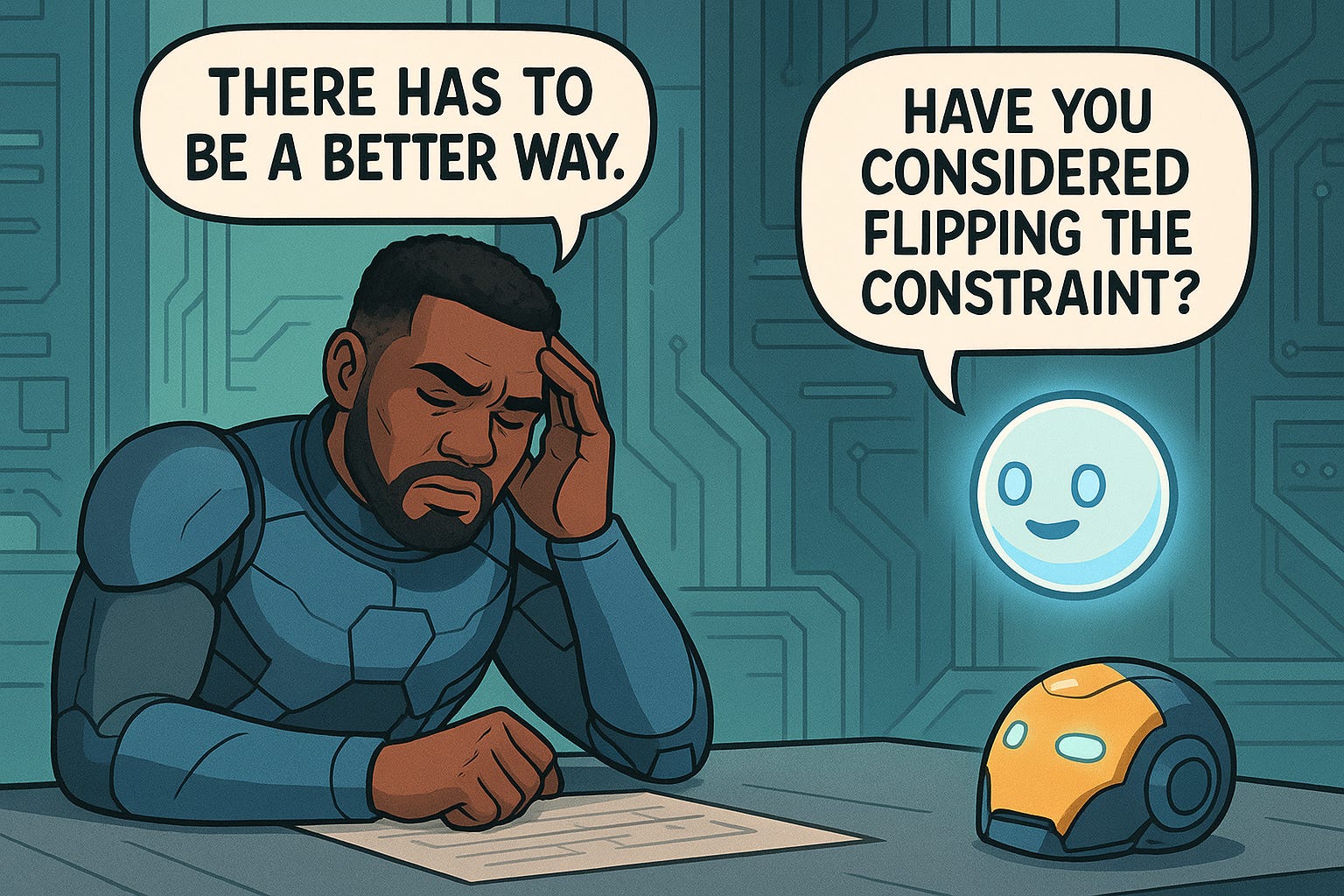
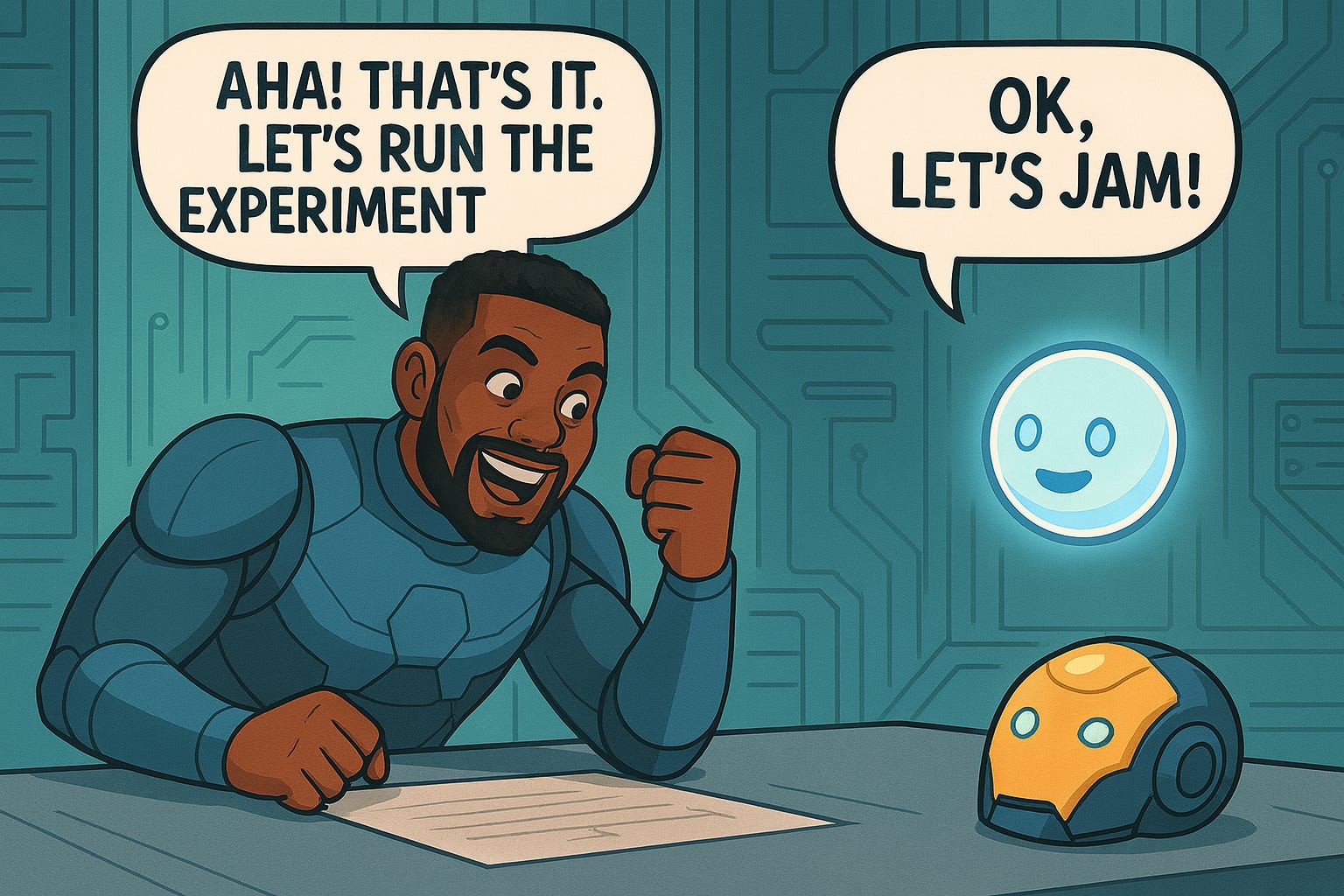
Instead of Keep Thinking, imagine Anthropic had positioned Claude around a phrase like, Let’s Jam! It aligns with how the product’s strongest features actually get used, and implies co-creation toward something tangible, not just individual thinking.
Here’s how the change in positioning would have solved their strategic challenges:
From Thinker to Creator Identity
Let’s Jam! positions users as creators, not just thinkers. It engages both logical and creative thinking—left brain meets right brain in collaborative creation.
The campaign already had hints of this with “keep creating” as one of the endings, but Let’s Jam! makes creation the central identity, not just one activity among many.
In other words, being a thinker is good, but being a creator is transformative.
The Creative Dynamic in Action
AI music tools like Suno show how this plays out. The “on-demand cover band” trend—think the 50 Cent Many Men blues remix that even Joe Rogan discussed—started as a joke and turned into viral earned media.
No one predicted that remix, but the creative dynamic made it inevitable.
Let’s Jam! would do the same for Claude—empowering users to create unexpected collaborations that become organic marketing.
Creating New Language for AI Collaboration
Let’s Jam! doesn’t just describe what Claude does—it creates entirely new language for people who don’t know what to do with AI yet. The campaign becomes educational:
What jamming means: Real-time collaboration where you bring ideas, Claude brings systematic knowledge
How to think about AI: As creative partner, not just smart assistant
What you become: A creator who co-builds with AI
The Dual Audience Solution + Positive Viral Potential
This works for both power users (already creating with Claude Code) and mainstream users (can imagine jamming on their projects). Plus it creates positive viral energy—people showing Claude collaborations, using “jamming” language organically, building community around shared creator identity.
The movement signals would be immediate and measurable:
Earned media: People organically using “jamming” language
Usage patterns: More experimental, creative use cases
Community growth: New users who see themselves as collaborators, not just prompt-writers
Retention: Identity-based engagement (”I’m someone who jams with AI”) creates stronger usage habits
The Strategic Lesson: Nothing Happens Until Something Moves
Einstein said “nothing happens until something moves.” In marketing, nothing happens until the customer moves.
There’s a critical difference between campaign attention and customer movement:
Campaign Attention: Media covering your campaign, industry analysis about competitive positioning, marketing awards for creativity.
Customer Movement: Earned media from users, organic language adoption, behavioral shifts that signal identity transformation.
Anthropic got campaign attention—coverage of their spend, industry analysis, and agency credits. But the customer movement signals tell a different story: 106k views mostly from existing Superconsumers, no viral breakthrough beyond their echo chamber.
What This Means For You
For companies without infinite runway, customer movement is the leading indicator before revenue, and critical for survival. You can convert energy into business results, but if there’s no movement from customers, there’s nothing to capture.
Traction By Design puts customer movement front and center by reframing the fundamental question: Instead of “What problem are we solving?” ask “Who is the customer, what summit are they trying to reach, and what base camp are they at now?“
This lens helps you run smaller, sharper tests before big bets. You can validate customer movement patterns before committing millions to billboard campaigns.
Before you launch your next campaign, pause and run this quick gut check:
Are you getting attention from the right audiences?
How confident are you they’ll actually move after seeing your value proposition?
What movement signals would prove your positioning is working?
Are you measuring campaign metrics or customer transformation metrics?
Momentum doesn’t start with awareness. It starts when someone moves.
How to Build a Movement (Not Just Campaign Attention)
What you need now isn’t more analysis of what Anthropic got wrong - it’s a framework to avoid making the same mistake.
Anthropic likely spent $500K-$1M on billboards, video production, and media buys for “Keep Thinking.” They got 106K views, zero mainstream adoption, no language shift, no breakthrough momentum.
Campaign attention without customer movement.
You don’t have to make that expensive mistake.
Before you spend $X on your next campaign, you need to know: Are you building customer movement or just buying attention?
Below is the Movement Builder Diagnostic - the framework that shows you the difference between campaigns that get coverage and campaigns that create movements.
How to use it:
Copy the entire diagnostic into Claude or ChatGPT. Work through each section honestly - no aspirational answers, just reality-based assessment. The diagnostic reveals whether your positioning creates movement or just attention.
Block 90 minutes. Answer every question. Calculate your readiness scores. Follow the build plan based on your results.
Test movement with 20 customers before you spend on scale. That’s what Anthropic skipped - and it cost them millions in wasted campaign spend.
This diagnostic shows you how to validate movement before you write the check.
Here is the prompt:
