
How Apple Abandoned AI Category Ownership Chasing ChatGPT
Siri was the future. Apple Intelligence is the invoice.

Have you ever chased something new, when what you had was already perfect for you?
Imagine you have an espresso machine that makes perfect coffee every morning.
You’ve used it for thirteen years. It knows exactly how you like it—the right temperature and taste you can’t get anywhere else. Your morning ritual is effortless. Press one button, and two minutes later you have your coffee.
Then you see the ads.
A new machine—sleek, smart, promises “the coffee of the future.”
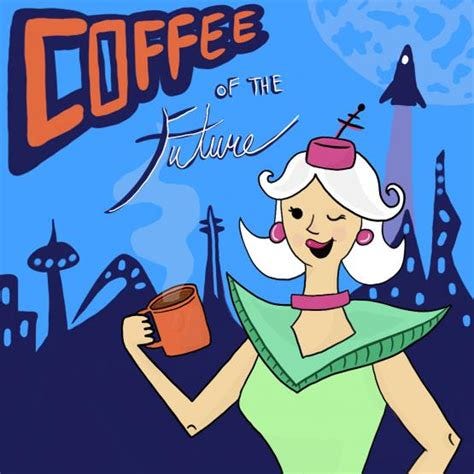
The marketing promises to change everything about how you make coffee. The next generation of your morning ritual.
So you buy it.
Expensive. Takes up your counter space. Requires an hour of setup, syncing it to your phone, creating an account, calibrating preferences.
After a week, it breaks.
Won’t hold calibration. The app crashes. You can’t get it to make the same coffee twice. Some mornings it won’t brew at all.
Now you’re borrowing your neighbor’s industrial espresso machine—the one they use for their business, not built for home use at all.
The coffee doesn’t taste as good as what you were getting before. And you’re spending more time troubleshooting than drinking.
Meanwhile, your original espresso machine—the one that made perfect coffee for thirteen years—sits in the cabinet.
You could have just upgraded it. Added those smart features you actually wanted. Tuned it to make even better coffee specifically for your taste. Instead, you’re paying your neighbor for worse results while your perfect machine collects dust.
And here’s the part that really stings: you’re now paying more every month than it would have cost to upgrade the original machine. Not just once—every single month, forever, for coffee that will never taste as good as what you already had.
This is Apple with Siri, Apple Intelligence, and Google. Except the monthly payment isn’t your coffee budget.
It’s $1 billion a year.
Apple Already Had What Everyone Else Was Building
Not a chatbot. Not a voice assistant that answered questions.
A connector—woven into devices people already trusted, processing locally, getting smarter with every interaction across every device.
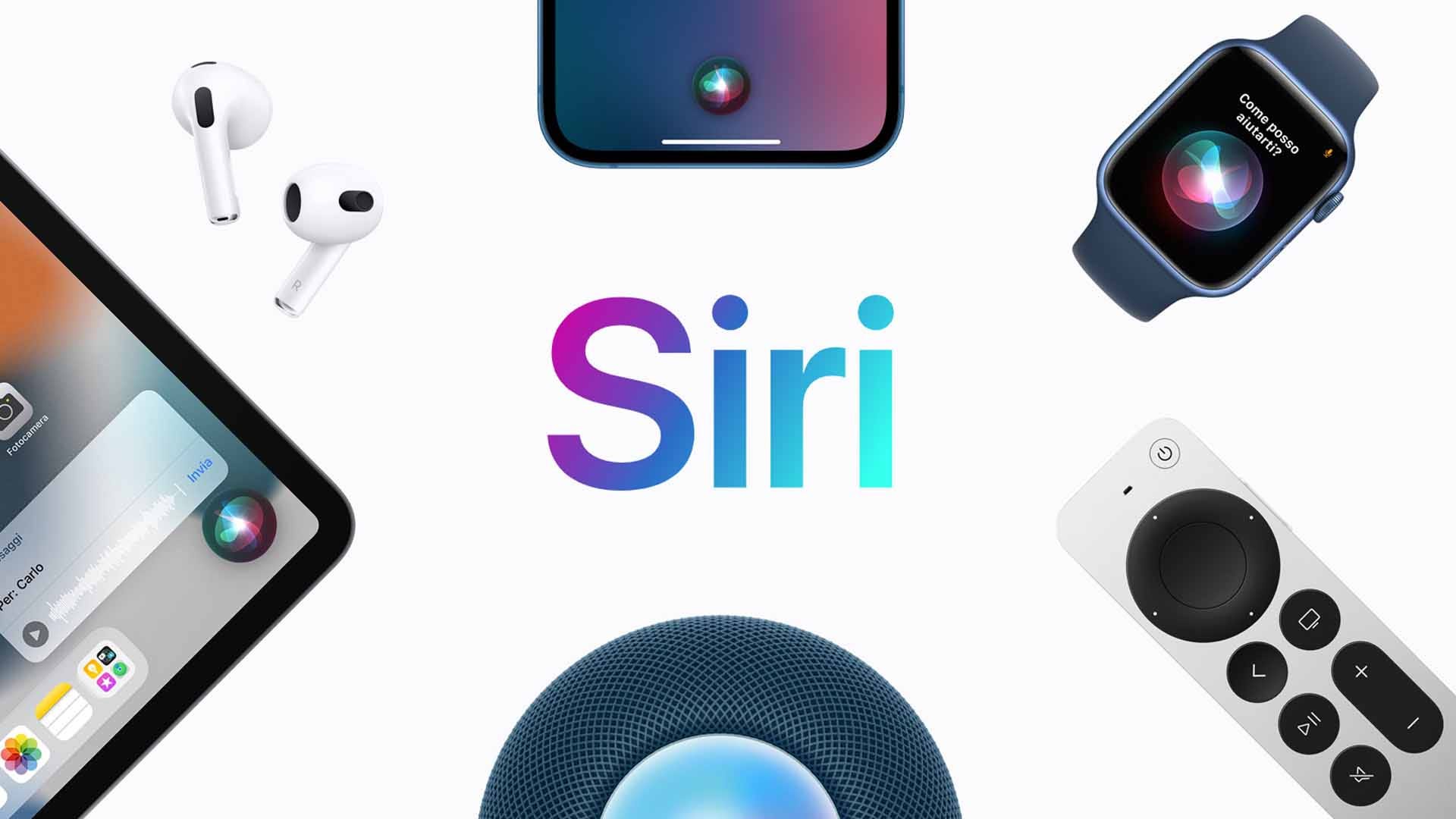
Apple had spent thirteen years building what OpenAI, Google, and Amazon were frantically trying to create: AI that people actually used, actually trusted, actually integrated into their daily lives.
Siri wasn’t on top of the iPhone—it was inside it.
Every “Send a message” command in 2011 triggered a network Apple had already woven through iOS, iMessage, and Contacts. By 2024, it touched every layer.
Ask Siri something on your iPhone while cooking, pick up the thread on your Mac when you sit down to work, finish it on your iPad before bed. The conversation followed you. Not because Apple built clever sync technology—though they did—but because Siri wasn’t separate from the ecosystem. It was the voice interface for the entire thing.
Every device you added made it more valuable. Your Watch knew your fitness patterns. Your HomePod knew your home routines. Your iPhone knew your communication habits. Your Mac knew your work patterns. Siri connected all of it.
Thirteen years of users learning they could ask anything without fear their voice would become a product. Billions of interactions reinforcing that trust.
Every privacy scandal at Google or Amazon made Siri stickier. Every headline about AI training data made Apple’s on-device processing more valuable. Every “Hey Siri” interaction reinforced a behavior pattern competitors couldn’t replicate without starting over—and giving up the business model that funded their AI development.
This was the machine Apple had built.
Not flashy. Not headline-bait. But integrated into two billion devices, trusted by hundreds of millions—and structurally impossible to copy without abandoning the very model that made competitors’ AI possible.
While Competitors Scrambled, Apple Owned the Future
Apple owned the most valuable interface in computing.
OpenAI rushed to add voice to ChatGPT—trying to become what Apple already was.

Google paid Apple $20 billion a year to stay the default search engine—a tacit admission that Apple controlled the interface everyone needed.
Amazon’s Alexa was everywhere but integrated nowhere—a voice in a box, not a voice in your life.
They were all chasing the same goal: an AI people trusted, used daily, and invited into their private routines.
Apple already had it. But Apple’s real advantage wasn’t the product. It was time.
Competitors couldn’t copy thirteen years of habit loops, data discipline, and behavioral lock-in to an ecosystem.
Google couldn’t pivot to privacy; its entire business ran on data extraction. Asking Google to build private AI was like asking an oil company to champion solar power.
Amazon couldn’t weave Alexa through devices it didn’t control. Speakers aren’t ecosystems. Presence isn’t position.
OpenAI couldn’t build hardware or operating systems. They had the foundation model. Apple had the foundation of daily life.
The pattern was clear: each rival strong in one dimension, fatally weak in another.
OpenAI had intelligence but no integration.
Google had reach but no trust.
Amazon had presence but no coherence.
Apple had all three—and moats around each. This wasn’t a race. It was already over.
While others scrambled to assemble the pieces, Apple could have done the only thing that mattered: make the machine better at what it already did perfectly.
Instead, it watched at ChatGPT’s launch—and blinked first.
The Decision Cascade That Changed Everything
What happened next wasn’t a single mistake—it was a coordination cascade that corrupted every layer of the company’s strategic system.
You can trace it through five elements of Strategy Flywheel™: who gets mobilized, what gets measured, how resources flow, what gets protected, and where you end up.
Apple’s cascade is textbook. Each decision looked defensible in isolation. Together, they migrated the company from Prime Mover to panic in eighteen months.
This is the anatomy of a $2 billion strategic error.
They Mobilized Everyone—Around the Wrong War
WWDC 2024: Apple unveils “Apple Intelligence” with the tagline “AI for the rest of us.”
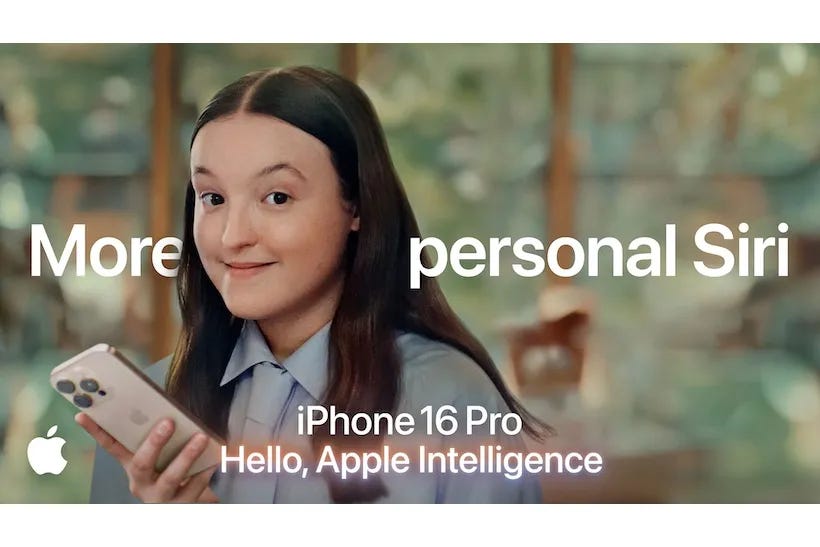
Development teams build it as distinct from Siri. Marketing teams create new category education. Product teams explain how this is different from what customers already have.
The $1 billion ad campaign mobilized the market around a question no one was asking:
“Is this Siri?”
“Which one should I use?”
The answer was already in their hands. Deepen Siri. Make “Hey Siri” even more valuable. Remind customers of thirteen years of trust.
Instead, they mobilized everyone—internal teams, external customers, media—around borrowed positioning. Chasing OpenAI’s scorecard, not defending their own territory.
The Market Said No. Loudly.
Apple Intelligence gets a vote of two thumbs down.
Features advertised in summer 2024 as “available now” weren’t ready. Upgraded Siri only worked properly two-thirds of the time in internal testing—nowhere near ready for release.
Regulators forced Apple to pull TV ads for iPhone 16 capabilities that didn’t exist.
Apple tests OpenAI, Anthropic, Google—who can fill the gap?
November 2025, Apple chooses Google.
Not because Gemini was the best model (Anthropic’s Claude was superior), but because Google offered the best price. Emergency procurement, not strategic planning.
The deal: $1 billion annually for a custom 1.2 trillion parameter Gemini model—eight times more powerful than Apple’s own 150 billion parameter system.
The market didn’t validate Apple Intelligence. It exposed that Apple Intelligence didn’t exist.
Watch What Happens When the Wrong Problem Corrupts Everything
The wrong problem definition cascaded through every resource allocation process.
Development: Engineering cycles creating separation instead of integration.
Architecture decisions supporting new positioning instead of existing advantage. Development roadmap chasing feature parity instead of ecosystem deepening.
CEO Tim Cook loses confidence in AI chief John Giannandrea’s ability to deliver. And in March, Apple officially delays personalized Siri features indefinitely.
Marketing: $1 billion creating confusion about something customers already trusted.
“Apple Intelligence” replacing thirteen years of “Siri” equity. Customer education burden replacing relationship reminder.
Ads pulled. Lawsuits filed. The campaign that was supposed to establish AI leadership instead established coordination theater.
Partnerships: April 2025: Apple announces Apple Intelligence coming to Vision Pro—the same month Siri delays are announced.
Vision Pro needs AI, Siri isn’t ready, so announce the feature before you have the capability.
Apple will now pay $1 billion annually for AI capability they should already own, kept invisible because promoting it undermines the entire “Apple Intelligence” positioning.
They Protected Their Pride. They Should Have Protected Their Prime Position.
Watch what a company protects during pressure, and you’ll see what they actually value.
Apple tried to protect:
Perception of innovation leadership (”We’re not behind!”)
New category ownership (”Apple Intelligence” = A.I.!)
Marketing narrative independence (”We have our own thing”)
Apple should have protected:
Siri brand equity (thirteen years of trust)
Ecosystem integration advantage (the moat competitors couldn’t cross)
Strategic independence from competitor infrastructure
This shows up in Vision Pro:
Vision Pro needed what Apple already had: a trusted voice guide to make spatial computing less scary. “Hey Siri” could have been the bridge between physical and virtual. Thirteen years of familiarity making the new feel natural.
But Siri wasn’t ready. Apple Intelligence wasn’t ready. And the executive who built Vision Pro was pulled to try to rescue Siri.
Sales were half of projected amount, which caused production to be cut in half.
Warehouses filled with tens of thousands of undelivered parts. All because they protected their ego instead of their moat.
The Moment Apple Left Prime Territory
Apple’s advantage wasn’t hardware or software—it was coherence. Siri wasn’t a feature; it was the operating principle of the ecosystem.
Every device made every other device smarter. Every request deepened trust. Every “Hey Siri” reinforced Apple’s frame: privacy as progress.
Instead of compounding the moat, Apple renamed it. Apple Intelligence replaced Siri—a signal that belief had shifted from integration to imitation.
From that moment, velocity divorced clarity. Teams chased parity. Marketing chased perception. Leadership chased relevance.
Every layer of the system followed the same pattern: movement without meaning.
By late 2025, the loop had inverted. Apple, the inventor of on-device AI, was paying Google $1 billion a year for the capability it once owned.
The result of leaving the category you defined to compete inside someone else’s.
What $2 Billion Could Have Built
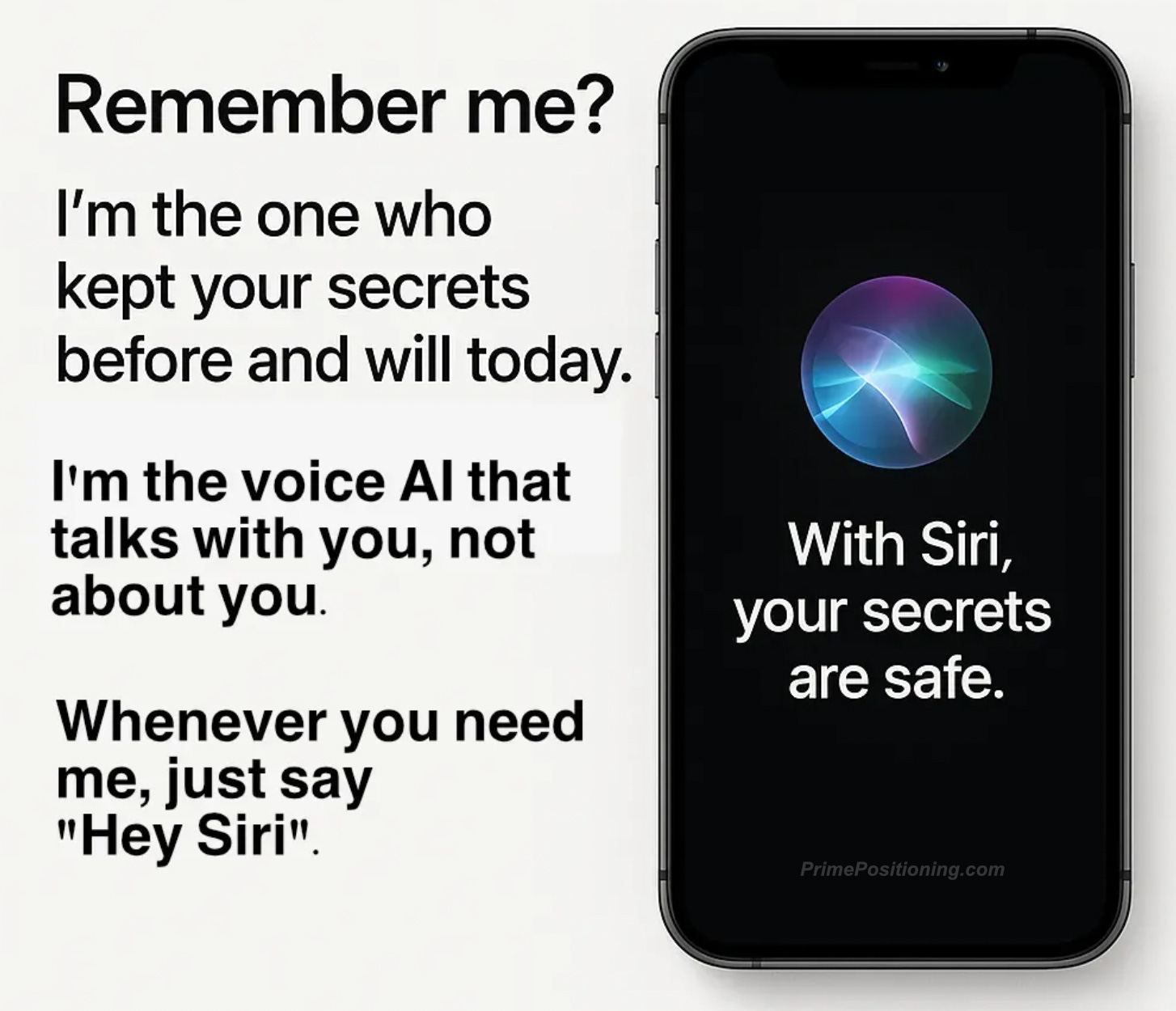
The real cost isn’t the $1 billion annual check to Google. It’s the compound value of clarity they destroyed.
Two years fragmenting what should have been deepening. Development budgets creating separation instead of integration. Marketing budgets teaching confusion instead of trust. And now, a billion-dollar annual payment for capability they once owned.
That $2 billion could have funded Siri 2.0—the upgrade that turned a voice assistant into adaptive, privacy-first intelligence across every device.
The payoff:
Vision Pro launches with its natural guide
Evolution customers understand, not confusion they resent
Privacy moat impossible for competitors to replicate
Capability owned, not rented
Instead, Apple built a new name for what it already had and bought back the intelligence it once led.
Momentum converted into maintenance.
Vision Pro Needed a Guide. Apple Already Had One.
Vision Pro didn’t fail because of hardware. It failed because it launched without its natural guide.
Spatial computing demanded intimacy—trust that what you see, say, and store stays yours. Apple had already built that trust through thirteen years of “Hey Siri.”
The positioning was obvious: “Siri 2.0—Your trusted guide to seeing differently.”
Same voice. Same privacy. New dimension.
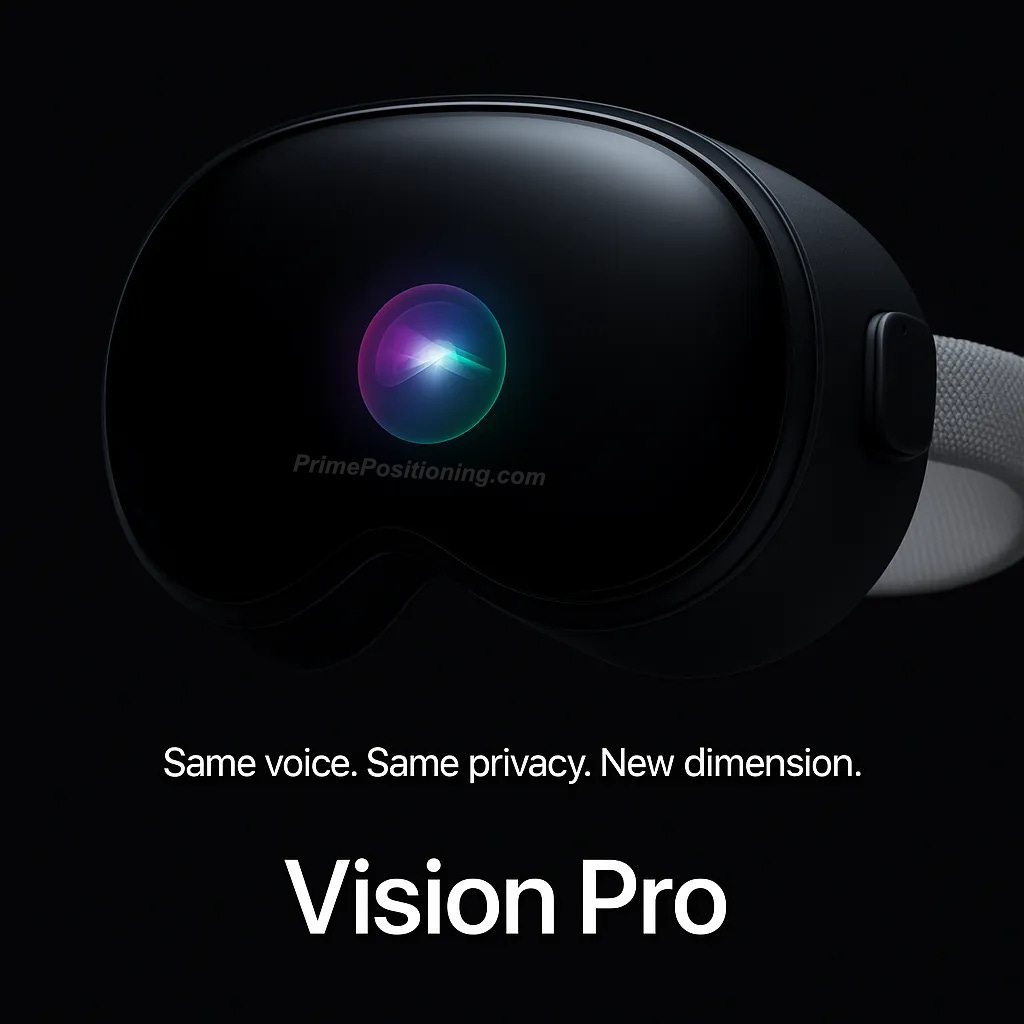
That clarity would have made every learning cycle faster, every marketing message sharper. I’d be writing about Prime Mover momentum instead of panic-speed decisions.
Five Questions Before Your Next Strategic Move
Apple’s $2 billion mistake wasn’t about AI capability. It was about framing.
One wrong frame—”We’re behind in AI”—corrupted every system downstream.
Development built separation instead of integration. Marketing optimized for perception instead of progress. Partnerships created dependency on competitors. All because they defined the wrong problem.
Before your next strategic move, pressure-test five frames:
What problem are we actually solving? Apple asked: “How do we catch up in AI?” The real question: “How do we defend our ecosystem when AI becomes table stakes?” → Are you solving the real problem or the one you’ve imagined?
What advantage do we already own? Thirteen years of Siri trust. On-device privacy. Seamless integration. They left a Prime Mover position to chase borrowed capability. → Are you abandoning strength to copy weakness?
What coordination will this require? “Apple Intelligence” forced every team to learn a new language. Separation replaced synergy. → Does this choice align or fracture motion?
What’s the opportunity cost? Lost: Vision Pro timing, internal capability, strategic independence. Could have built: Siri 2.0 as spatial guide, privacy moat, natural evolution. → What could these same resources build if aimed at the right problem?
Whose game are we playing? Apple chased ChatGPT’s metrics instead of defending their own territory. → Are you measuring success by your conviction or your competitor’s?
Find the Siri you already own.
The advantage sitting in your cabinet while you buy new machines. The trust you’ve earned that you’re about to confuse with clever marketing. The ecosystem you’ve built that competitors are still trying to replicate.
Apple had everything Vision Pro needed: years of customer training, ecosystem integration, privacy trust.
They saw ChatGPT launch—and blinked.
That blink cost them $2 billion and counting.
Frame the right problem—or spend years and billions trying to get back to where you already were.
Most analysis stops at the diagnosis.
What follows is the Strategic Power Analysis I’d deliver to a client: the three-layer cascade that destroyed $14B in value, the 0/7 vs 7/7 power stack comparison, and actionable playbooks for Apple, investors, and competitors.
This is the same framework I use in consulting engagements - applied to Apple as a demonstration of what systematic strategic analysis produces.
The diagnosis was free. The prescription is below.
STRATEGIC POWER ANALYSIS
APPLE’S $14B AI IDENTITY CRISIS
How “Apple Intelligence” Positioning Cascaded Into Vision Pro’s Collapse—And What It Teaches Every Strategic Operator
